Enduro climbing technique is one of the most important skills in enduro. In fact, climbs are among the most challenging and fascinating aspects of enduro. It is precisely there that a rider’s true ability is revealed. Some seem to climb anywhere with ease, whilst others come to a halt after just a few metres, losing traction or tipping over.
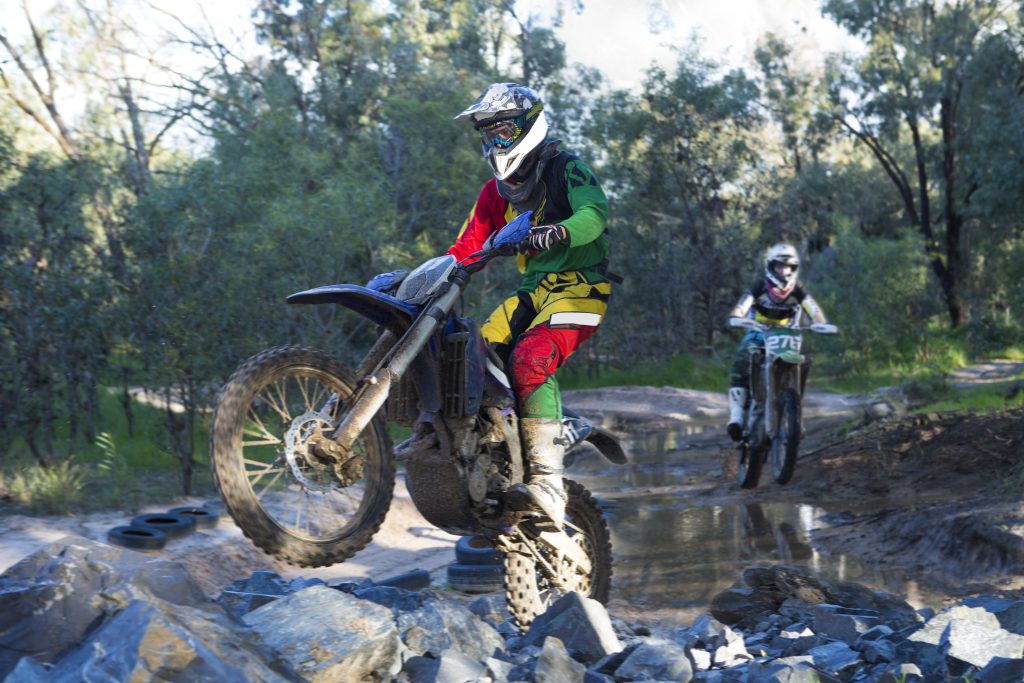
The truth is that tackling a technical climb doesn’t depend solely on the bike’s power. What counts most is technique, body position and the ability to stay calm and in control.
Many beginners make the same mistakes: too much throttle, poor posture or choosing the wrong line. With a few tips, however, even the most challenging climbs become much more manageable, with the right enduro climbing technique 🙂
Body position is key for the correct enduro climbing technique
In enduro, the body works continuously in tandem with the bike.
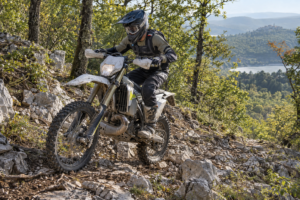
On climbs, your weight must shift forwards to prevent the front end from lifting too much. If the rider leans too far back, the bike tends to wheelie or lose directional control.
The ideal position involves:
- torso leaning forward
- elbows out
- legs clamped around the bike
- eyes focused on the end of the climb
One of the most common mistakes is looking straight at the front wheel. This causes you to tense up and reduces control.
Choosing the right line changes everything
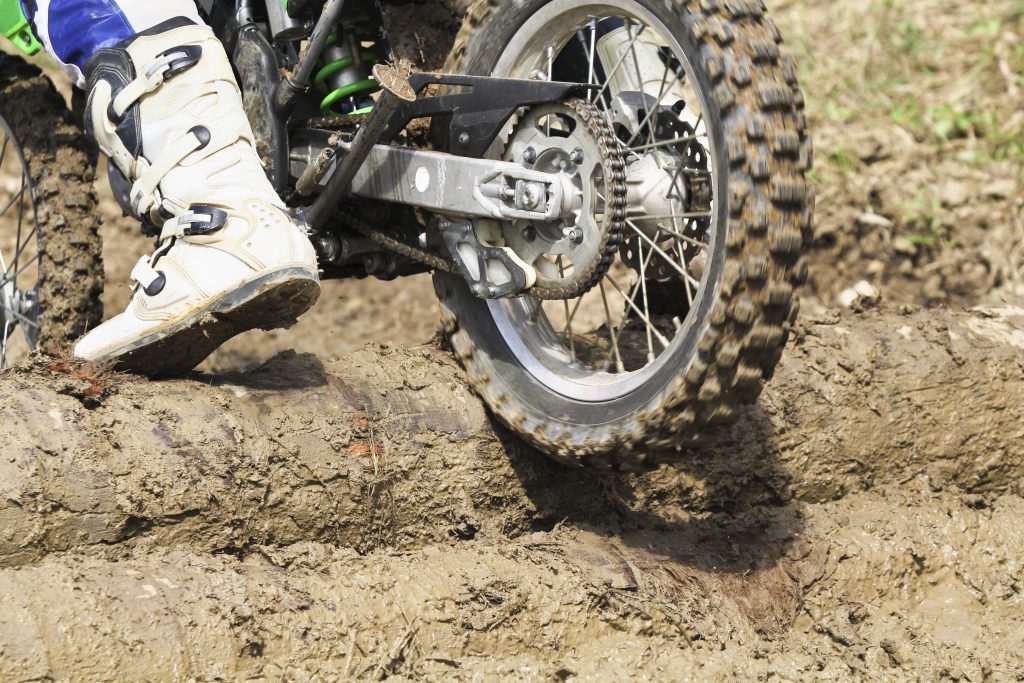
Many climbs seem impossible simply because you’ve chosen the wrong line.
When in doubt, it’s always best to look for:
- firm ground
- fewer loose stones
- fewer wet roots
- lines that are as smooth as possible
In hard enduro, the shortest line isn’t often the best.
A slightly longer but smoother line allows you to maintain traction and a constant speed.
The secret is fluidity
Here’s a proper climb: the pipeline.
One of the most important aspects of enduro climbs is avoiding sudden movements.
Suddenly opening the throttle almost always leads to:
- loss of traction
- wheel spin
- the bike veering off course
- tipping over
Instead, you need a smooth, progressive and relaxed riding style.
Traction is maintained better with gentle, continuous acceleration.
Many experienced riders seem “slow”, but in reality they are simply avoiding wasted energy and loss of grip.
Clutch: the most important tool for the proper enduro climbing technique
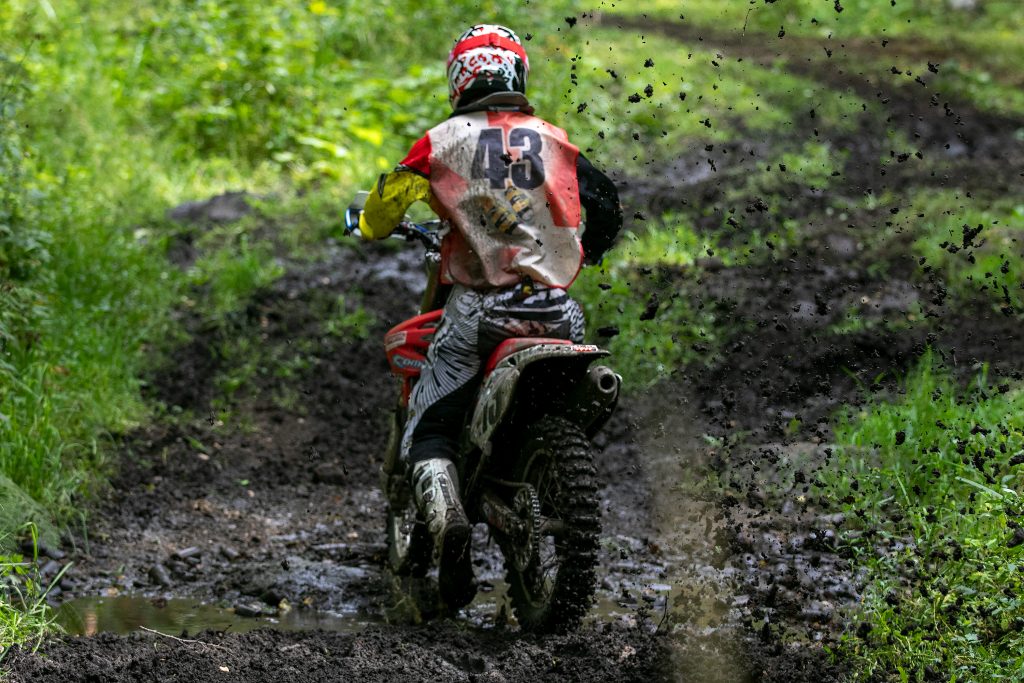
In modern enduro, the clutch is fundamental.
Using it correctly allows you to:
- control traction
- avoid stalling
- handle sudden obstacles
- modulate power
For a proper enduro climbing technique, you need to learn to “feel” the bike.
A clutch used well can save a climb even when the terrain is extremely difficult.
The most common mistakes on climbs
Many problems stem from mistakes repeated over and over.
Setting off too hard
Attacking a climb as if it were a race often leads only to losing control after a few metres.
Sitting back too early
Staying seated puts too much weight on the rear and lightens the front.
Stopping at the worst point
When the bike loses speed, many riders come to a standstill on the steepest section, making it almost impossible to set off again.
Fear
Tension stiffens the body and impairs every movement.
In enduro, relaxation is often more important than physical strength.
How much does the bike matter?
Less than you might think.
A good bike certainly helps, but technique remains the key factor.
Many experienced riders manage to tackle extremely difficult climbs even on less powerful bikes, thanks to:
- balance
- clutch control
- traction management
- line choice
To start with, a 250 or 300cc two-stroke is often the ideal solution.
Training: the real improvement
Climbing is learnt mainly through practice.
Repeating the same section over and over again allows you to develop:
- sensitivity
- throttle control
- balance
- confidence
Physical fitness also makes a huge difference.
Tired arms and weak legs make everything more difficult, especially in hard enduro.
The most important tip
In enduro, climbs are conquered first with your mind and then with the bike.
Observing the terrain, staying calm and riding smoothly is worth far more than mere aggression.
Often, the rider who reaches the top isn’t the one who accelerates the most, but the one who makes the fewest mistakes.
Do you want to learn or improve your enduro climbing (and descending) technique? Choose the tour that suits you here.