For a lot of riders, how to ride downhill on a dirt bike is the most intimidating obstacle in off-road riding. A loose, rocky slope dropping away in front of you triggers every instinct to slow down, sit back, and grab the brakes, and almost all of those instincts make things worse. Yet a steep descent ridden well is one of the most satisfying things you can do on a dirt bike, and the technique behind it is far more learnable than it looks.
The fear usually comes from a feeling of having no control, of being a passenger as gravity takes over. Control on a descent comes from a handful of fundamentals applied calmly: where you put your body, how you use the brakes, and where you look. Get those right and a slope that looked terrifying becomes a matter of managing speed down a hill.
Get Your Body in the Right Place
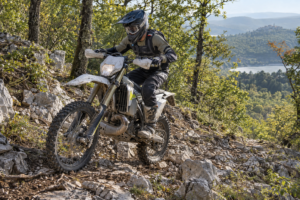
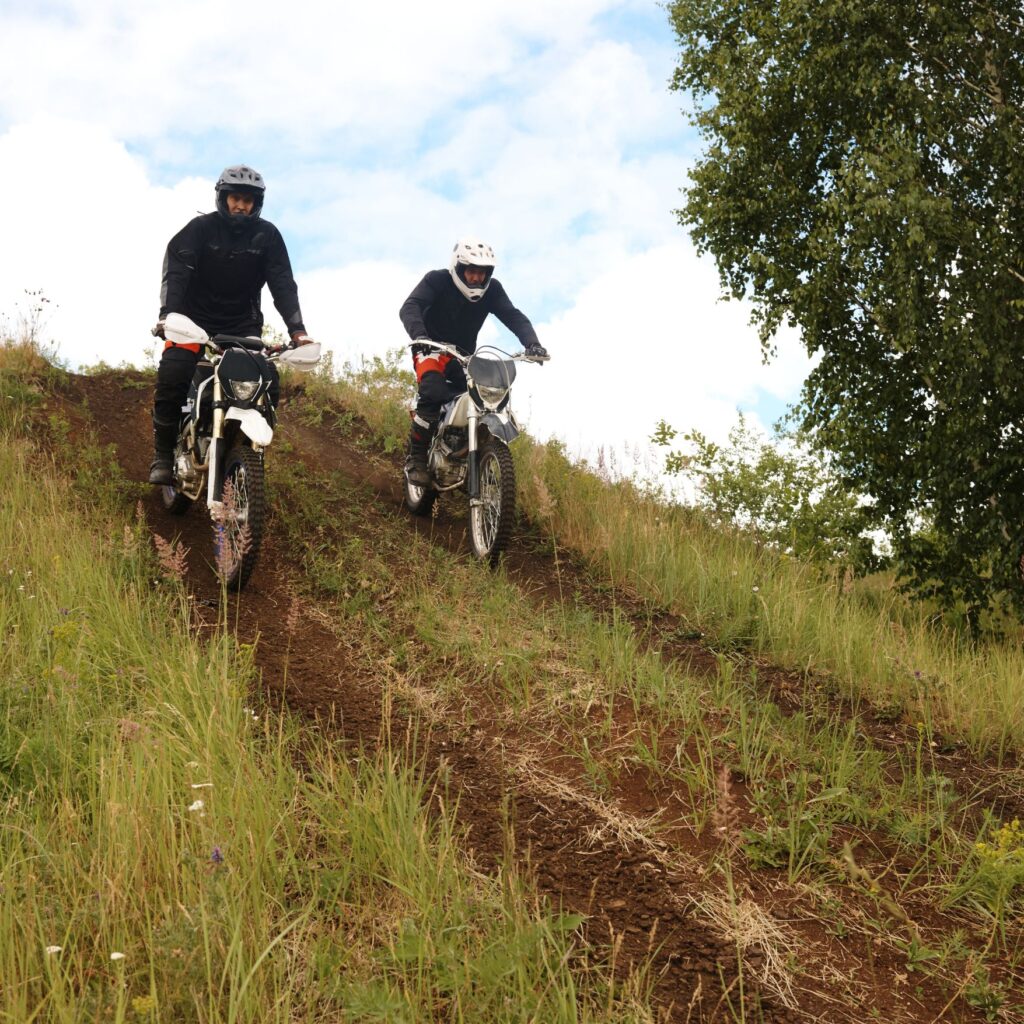
Body position is the foundation of everything on a descent. The steeper the slope, the further back your weight needs to go. Stand on the pegs, keep your knees bent to absorb the terrain, and shift your hips back toward the rear of the seat, in extreme cases right over the rear fender. This keeps weight on the rear wheel where you want it and stops the bike from tipping you forward over the bars.
Keep your arms loose and your elbows up. Locked, stiff arms transmit every bump straight into the bars and rob you of control, while relaxed arms let the front wheel move and track over rocks and ruts. Grip the bike with your legs so your hands are free to steer and brake rather than holding you on. The position should feel low, balanced, and ready, with your weight carried through your legs and the bike able to move freely beneath you.
Master the Brakes
Braking is where most descents are won or lost. The temptation is to grab both brakes hard, but on a loose, steep slope that is the fastest route to trouble. A locked front wheel on loose ground will wash out or pitch you forward, and a locked rear simply skids and removes what little steering control the back of the bike was giving you.
Lean on the rear brake as your primary tool, applying it smoothly and steadily rather than stamping on it. Use the front brake gently and progressively to add stopping power, feeling for the point where the tire is still gripping rather than sliding. Smooth, gradual pressure on both is the goal. If you feel a wheel start to lock and skid, ease off slightly to let it regain traction, then reapply. The aim is controlled, continuous speed management, not a series of harsh grabs.
Use the Engine and the Right Gear
Your engine is a braking tool as well as a power source. Select a low gear before you start down, and let engine braking do much of the work of holding your speed in check. This takes load off the brakes and gives you a smoother, more predictable descent.
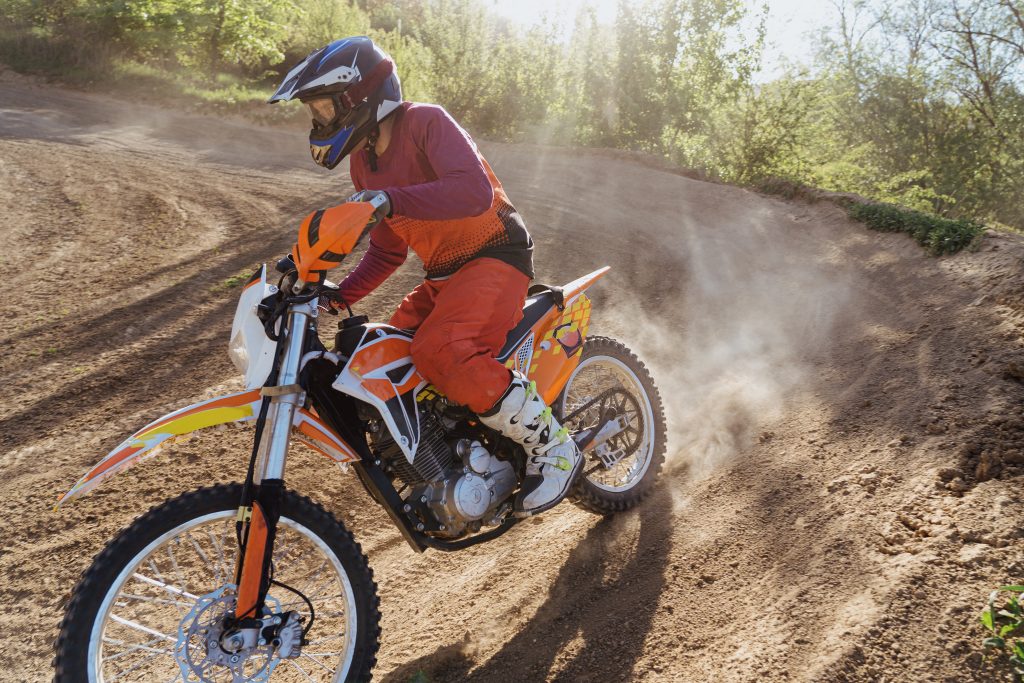
Resist the urge to pull in the clutch as you go down. Doing so disconnects engine braking and lets the bike freewheel, which is exactly when speed runs away from you. Keep the clutch out and the engine doing its job, covering the lever with a finger only so you can use it deliberately if you need to.
Look Where You Want to Go
On a steep descent your eyes matter as much as your hands. Riders in trouble tend to stare at the obstacle they fear, the big rock or the deep rut directly in front of the wheel, and the bike follows your gaze straight into it. Lift your eyes and look well down the slope to where you want to end up. Reading the terrain ahead gives you time to choose a clean line and to make smooth, early inputs rather than panicked late ones.
Pick your line before you commit, aiming for the most stable surface you can find, and then trust it. Hesitation halfway down, a sudden stab at the brakes or a change of mind, is what unsettles the bike. A descent rewards calm commitment far more than caution.
Managing the Loose Surface
Loose ground adds one more layer, because traction is limited and unpredictable. The answer is smoothness in every input. Sudden braking, sharp steering, or abrupt throttle on a loose slope breaks traction and starts a slide. Keep your movements gentle and progressive, let the bike squirm a little underneath you without overreacting, and maintain just enough momentum to keep it stable and tracking straight. Going too slowly can be as much a problem as going too fast, because a bike with no momentum is harder to balance.
If the back end steps out or the bike starts to slide, stay off the front brake, keep your weight back, look ahead to where you want to go, and let the bike settle. Most slides resolve themselves if you stay calm and avoid the panic inputs that turn a wobble into a fall.
Build It on Real Terrain
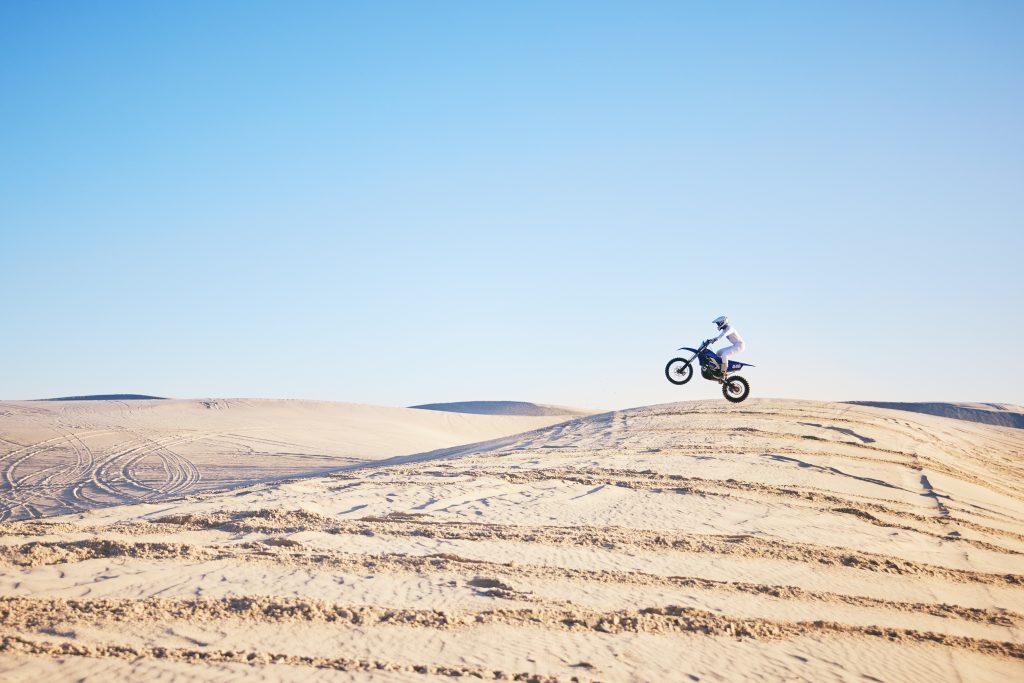
Reading this is one thing; trusting it on an actual slope is another, and that trust only comes from doing it. Steep, loose descents are exactly the kind of skill best learned somewhere with varied terrain and experienced riders alongside you, where you can build confidence on progressively harder slopes rather than scaring yourself on a descent that is beyond you. The terrain of Istria offers precisely that mix, from gentle forest trails to genuinely technical descents.
Do you want to train how to ride downhill on a dirt bike, while having fun? Check out our all inclusive packages https://enduroexperience-croatia.com/en/packages/
Or would you rather want to read more about our passion? Discover more motorcycle insight in our blog.