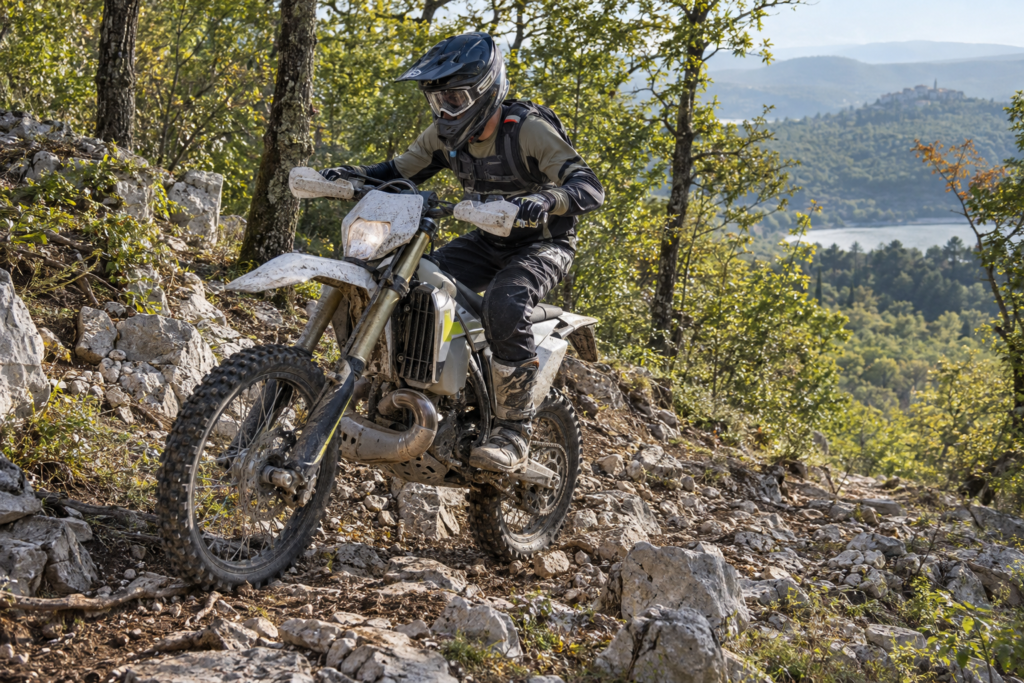
You reach a steep, loose climb and add more throttle. The rear wheel spins, the motorcycle moves sideways and the engine gets louder without carrying you any closer to the top. On the next attempt, another rider approaches with fewer revs, feeds the clutch out gradually and continues climbing without drama.
The difference is not necessarily power. It is how that power reaches the ground.
Good enduro clutch control allows you to regulate the connection between the engine and the rear wheel with more precision than the throttle alone can provide. It helps the motorcycle move at walking speed, keeps the engine running when momentum disappears and delivers a short burst of power when you need to cross a rock, root or log.
The clutch can also overheat when it is asked to absorb excessive power for too long. The objective is therefore not to avoid slipping the clutch completely. Controlled slipping is an essential enduro technique. The real skill lies in using it deliberately, for the shortest time needed, while allowing the clutch to engage whenever the terrain permits.
What enduro clutch control means
The clutch lever does more than disconnect the engine during gear changes. Between fully disengaged and fully engaged lies the friction zone, where the clutch plates begin to transfer power while still slipping against each other.
Within this zone, small lever movements create significant changes at the rear wheel. The engine can continue running at a useful speed while the rider decides how much of its power should reach the tyre.
This is particularly useful in enduro because available grip changes constantly. A throttle position that works on firm soil may produce immediate wheelspin when the rear tyre reaches a wet root or loose stone. Modulating the clutch allows the rider to react quickly without closing the throttle completely and losing engine response.
The Motorcycle Safety Foundation includes coordinated use of the clutch friction zone, throttle and brakes among the core skills taught in its off-road training programme. Although advanced enduro adds more difficult terrain, the same principle remains at its foundation: smooth clutch engagement improves low-speed control. The MSF DirtBike School curriculum explains how friction-zone practice supports controlled starts and off-road riding.
Why the throttle alone is sometimes too crude
The throttle controls engine output, but the engine does not always respond in perfectly small increments. This is especially noticeable on a powerful motorcycle, a responsive two-stroke or a bike with short gearing.
At low speed, opening the throttle may send more torque to the rear wheel than the ground can accept. Closing it again can remove too much power, causing the motorcycle to hesitate or stall. The rider moves between these two reactions without finding the narrow point where the tyre continues to drive.
The clutch adds another layer of control. You can maintain a relatively steady engine speed and use the lever to meter the amount of torque reaching the wheel. When grip improves, release the lever further. When the tyre begins to spin, pull it in slightly and reduce the transfer of power.
Effective enduro clutch control feels calmer than it sounds. The engine does not need to scream, and the lever does not need to move through its full travel. Much of the useful work happens through small adjustments around the engagement point.
Finding the friction zone
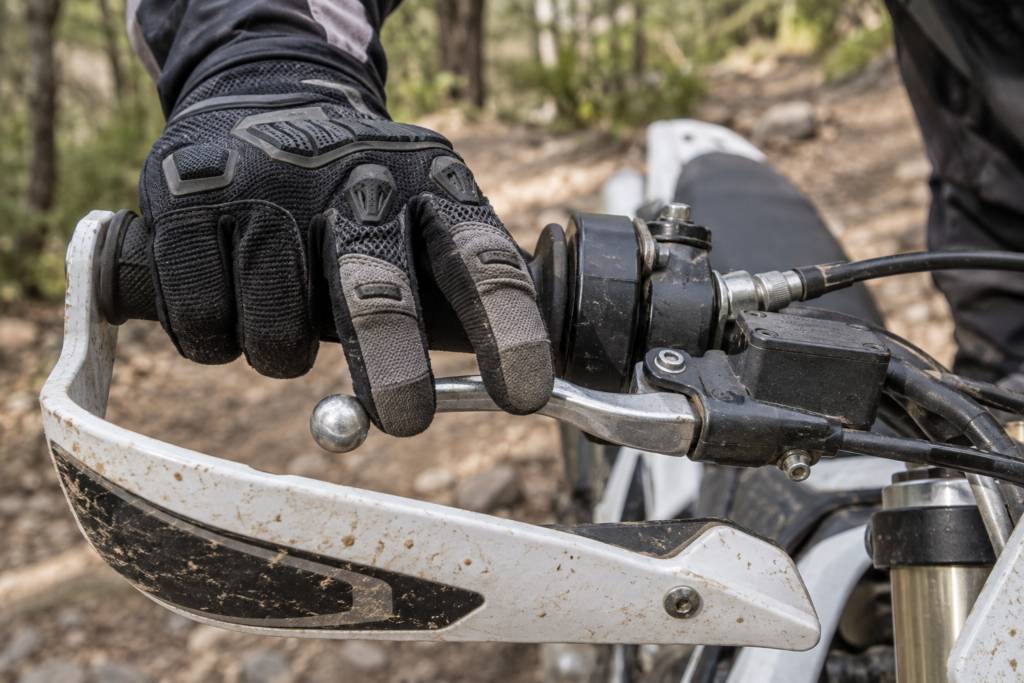
Before practising enduro clutch control on a climb, you need to know exactly where your motorcycle’s clutch begins to engage. Lever position varies between motorcycles and can change with adjustment, temperature, wear and hydraulic condition.
Choose a flat, open practice area with good grip. Select first gear and begin releasing the clutch slowly with little throttle. Notice the point where the engine tone changes and the motorcycle starts to move. Pull the lever in again, stop and repeat.
The aim is to recognise the engagement point without having to think about it. After several repetitions, allow the motorcycle to creep forward while holding the lever within the friction zone. The movement should remain slow and controlled.
You can then introduce gentle throttle. Hold the engine at a stable speed and regulate forward movement mainly through small clutch inputs. If the motorcycle surges, stalls or accelerates unpredictably, reduce the speed of your lever movements.
The exercise may feel basic, but it develops the sensitivity needed for technical riding. Practising the friction zone on easy ground leaves more attention available for line choice and balance when the terrain becomes difficult.
Use one or two fingers on the clutch lever
Most enduro riders operate the clutch with one or two fingers while the remaining fingers keep contact with the handlebar grip. This provides access to the lever without giving up control of the motorcycle when the front wheel strikes a rock or changes direction.
The best choice depends on lever reach, clutch effort and hand strength. A light hydraulic clutch may be comfortable with one finger. A heavier system may require two. Forcing one-finger operation when the lever is difficult to pull often creates forearm fatigue and inaccurate control.
Lever position matters as well. If the lever sits too high, too low or too far from the grip, the wrist may have to bend awkwardly every time the clutch is used. Adjust the reach and angle so that your hand can remain relaxed while standing in your usual riding position.
Make sure the lever can move through the necessary range without trapping the other fingers against the grip. A fashionable setup is of little value if it prevents complete disengagement or becomes painful after an hour.
Enduro clutch control on loose climbs
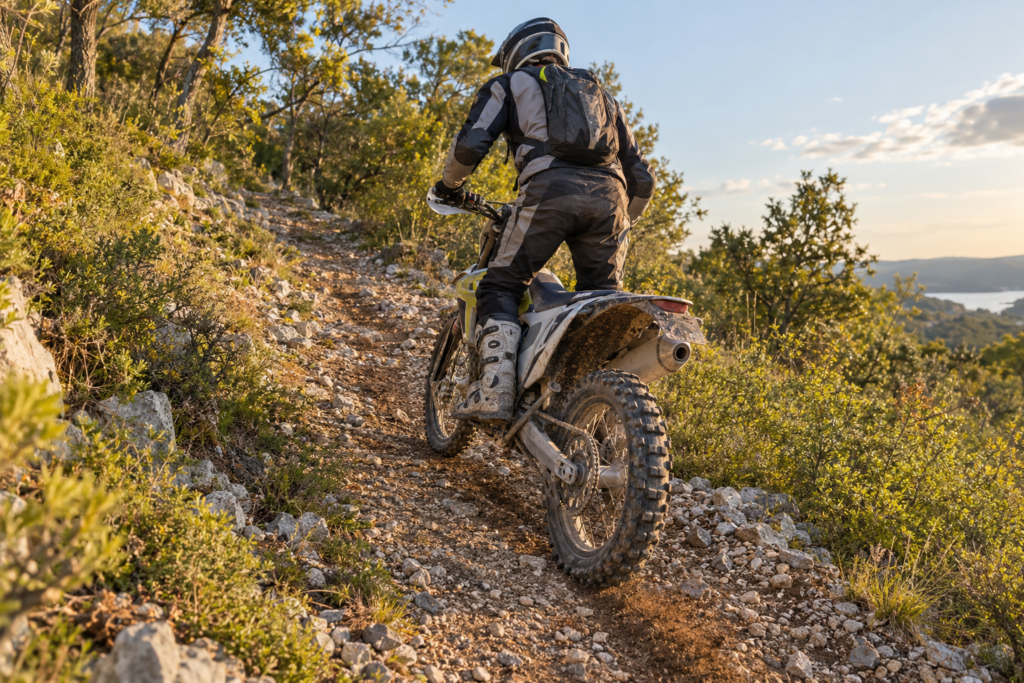
A loose climb rewards steady drive. Excessive wheelspin digs into the surface, moves the rear of the motorcycle sideways and wastes momentum.
Approach in a gear that allows the engine to work without immediately running out of revs. Maintain a controlled throttle position and use the enduro clutch control to feed power to the rear wheel. As the tyre finds grip, release the lever further. If it starts to spin, pull the lever in slightly rather than making a large, sudden change at the throttle.
Your body position remains part of the equation. The clutch cannot create grip if the rider removes too much weight from the rear tyre or hangs rigidly from the handlebars. Stay balanced through the footpegs, keep the upper body sufficiently forward to control the front and allow the motorcycle to move beneath you.
When the climb becomes steeper, the temptation is to increase both throttle and clutch slip continuously. This produces heat quickly. A better attempt often begins with more momentum, a cleaner line or a lower gear rather than several seconds of high revs against a half-engaged clutch.
If you stop completely, pause before repeating the same input. Reposition the motorcycle, examine the line and give the clutch time to cool if it has been slipping heavily.
Using the enduro clutch control in tight turns
A tight uphill turn asks the motorcycle to remain balanced at a speed where the engine may struggle to run cleanly. Pulling the clutch fully in removes the drive that helps stabilise the bike. Releasing it abruptly can produce a sudden jump forward.
Holding the lever near the friction zone gives you a middle position. A small amount of power keeps the motorcycle moving, while the rear brake can help control speed and settle the chassis.
Look through the turn instead of down at the front wheel. Keep your outside foot weighted and allow the motorcycle to lean beneath you. As the front wheel points towards the exit, feed the clutch out progressively and let the bike drive away.
Many riders rush this final movement. They reach the exit, release the lever suddenly and spin the rear tyre. A fractionally slower release often produces better acceleration because more of the engine’s power becomes forward movement.
Lifting the front wheel over obstacles
Rocks, roots and logs sometimes require a short, accurately timed increase in power. Simply opening the throttle may create too much forward acceleration before the front wheel becomes light.
The clutch allows you to store engine energy and release it at the moment it is useful. With the engine at a controlled speed, briefly disengage or partially disengage the clutch, then feed it out as your body movement unloads the front suspension.
Timing matters more than high revs. The clutch release, suspension movement and rider input should support one another. When they arrive separately, the motorcycle may drive into the obstacle, lift the wheel too late or spin the rear tyre.
Start with a painted line or a small piece of wood on level ground. Practise lightening the front wheel without trying to produce a large wheelie. Increase the obstacle only after the movement becomes predictable.
Good hard-enduro clutch technique is built through accurate repetitions on manageable obstacles. Learning it during a difficult climb creates unnecessary risk and encourages hurried movements.
Why riders burn their clutches
A clutch generates heat whenever its plates slip against each other. Short, controlled periods in the friction zone are part of normal enduro riding. Problems begin when substantial power is converted into heat for too long.
This often happens when a rider uses a high gear and tries to compensate by slipping the clutch continuously. The engine remains busy, but only part of its output reaches the wheel. Selecting a lower gear would allow the motorcycle to drive with the clutch more fully engaged.
Another common cause is holding high revs while barely releasing the lever. This may keep the motorcycle moving, but the clutch absorbs an enormous amount of energy. The same technique repeated through several obstacles can raise its temperature quickly.
Riding with a finger resting heavily on the lever can also maintain slight clutch slip without the rider noticing. Keeping one or two fingers ready is useful, provided they are not applying constant pressure.
Poor lever adjustment may prevent the clutch from engaging fully. On cable-operated systems, incorrect free play can leave the mechanism partially released. Hydraulic systems require their own inspections, including fluid condition, leaks and correct lever movement. Always follow the specifications in the motorcycle’s manual.
Signs that the clutch is becoming too hot
An overheated clutch may announce itself through a strong burnt smell. The engagement point can begin to feel different, and engine speed may rise without a matching increase in motorcycle speed.
Lever feel can also change as components and fluid heat up. In more serious cases, the motorcycle may become difficult to drive even when the lever has been released.
If you notice these symptoms, stop in a safe place and let the system cool. Continuing to rev the motorcycle while the clutch slips adds more heat and can damage the friction plates, steel plates and oil.
Once the bike has cooled, inspect lever operation and free play where applicable. Persistent slipping, dragging or an altered engagement point should be investigated before the next demanding ride. Replacing worn plates is cheaper and safer than waiting for complete failure on a remote trail.
Choosing the right gear reduces clutch abuse
Good enduro clutch control works together with correct gear selection. The clutch can refine the delivery of power, but it should not spend the entire ride correcting an unsuitable gear.
A lower gear gives the engine more mechanical advantage and usually requires less prolonged slipping at very low speed. A higher gear can soften the response and help manage traction in some slippery situations, but it may demand more clutch work if the engine falls below its useful range.
The correct choice depends on the motorcycle. A 300 cc two-stroke can pull a taller gear in situations where a small two-stroke needs more revs and frequent clutch input. A four-stroke may produce steady torque at low speed, although it can still stall if the revs drop too far.
Our comparison of two-stroke and four-stroke enduro motorcycles explains how each engine delivers power and why clutch use feels different between motorcycles.
Listen to the engine and notice how much lever movement each section requires. If you are constantly holding the clutch halfway in, try another gear or reconsider your speed and line.
Three exercises for better dirt bike clutch control
A useful first exercise is the slow ride. Mark a straight corridor on flat ground and cross it as slowly as possible while keeping both feet on the pegs. Hold a gentle throttle, use the friction zone to regulate drive and add light rear brake pressure when necessary. The objective is smooth movement rather than the slowest possible time.
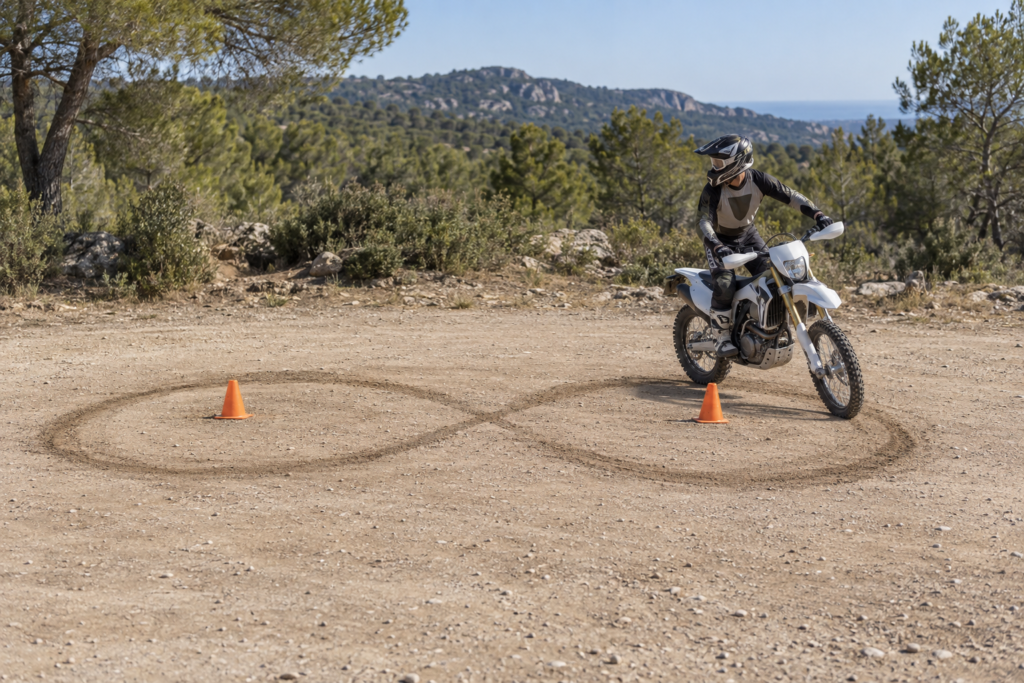
For the second exercise, place two markers several metres apart and ride repeated figure eights. Keep your head turned towards the exit of each turn. Use small clutch adjustments to prevent stalling and control acceleration as the motorcycle straightens.
The third exercise introduces a gentle slope. Stop partway up, hold the motorcycle with the brakes and practise restarting without rolling backwards or spinning the tyre. Release the clutch gradually until you feel the motorcycle pulling against the brakes, then coordinate brake release with progressive clutch engagement.
Keep these practice sessions short. Once your hand becomes tired, lever movements lose precision and poor habits begin to replace useful repetition.
Clutch control should reduce effort
The best enduro clutch control does not look dramatic. The motorcycle continues moving while the engine remains within a useful range, and the rear tyre receives only the power it can convert into forward motion.
As the technique improves, difficult sections begin to require less physical effort. You spend less time recovering from wheelspin, restarting stalled engines or lifting a motorcycle that has moved sideways off the intended line.
The clutch cannot replace balance, body position or line choice. It connects all of them to the engine. When those elements work together, the motorcycle feels calmer and the rider has more time to react.
If you want to practise these skills on varied terrain with routes adapted to your experience, explore the Enduro Experience Croatia packages. Technical climbs, rocks and changing grip provide the conditions in which precise clutch control becomes genuinely useful.
Frequently asked questions
Should you use the clutch in enduro?
Yes. Controlled clutch use is essential in slow turns, technical climbs and obstacles. The aim is to use the friction zone precisely and allow the clutch to engage fully whenever continuous slipping is unnecessary.
Is slipping the clutch bad for an enduro motorcycle?
Short periods of controlled slipping are part of normal enduro riding. Prolonged slipping under high power creates excessive heat and accelerates wear. Gear selection, momentum and smooth inputs help limit the amount of time spent in the friction zone.
Should you use one or two fingers on the clutch?
Both methods can work. Use the smallest number of fingers that lets you operate the lever smoothly through the necessary range while maintaining secure contact with the handlebar.
Why does my rear wheel spin on climbs?
Wheelspin can result from excessive torque, abrupt clutch engagement, poor body position, unsuitable tyre pressure or a weak line. Smoother clutch release helps, but the entire combination must support traction.
Can clutch control prevent the motorcycle from stalling?
It can help keep the engine within a useful rpm range at low speed. Correct gear selection and suitable throttle input remain necessary.