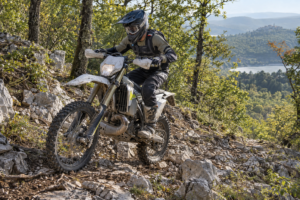
The difference between a carbureted motorcycle and a fuel-injected enduro bike can appear simple when it is explained in a workshop. One uses mechanically controlled jets, while the other relies on an injector, sensors and an electronic control unit. Out on the trail, however, the distinction becomes much more interesting.
You notice it when you start the bike on a cold morning, climb from a warm valley into cooler terrain, try to regain traction on wet roots or restart the engine after an awkward stall halfway up a hill. These are the situations in which the fuel system stops being an abstract specification and begins to influence the riding experience.

Fuel injection has become the standard choice on most modern enduro motorcycles, but that does not make the carburetor obsolete or automatically inferior. A well-adjusted carbureted bike can be responsive, reliable and satisfying to ride. The real question is not simply which system is more modern, but which one better suits the rider, the terrain and the way the motorcycle will be maintained.
Carburetor vs Fuel Injection: The Essential Difference
A carburetor mixes fuel and air mechanically. As air passes through a narrowed section inside the carburetor, the pressure change draws fuel through a series of small openings known as jets. Different jets and needle positions control the mixture at different throttle openings.
When the carburetor is correctly adjusted, this system works extremely well. The problem is that the setup remains largely fixed while the surrounding conditions continue to change. Temperature, altitude and air density can all influence how the engine runs.

A fuel-injected enduro bike approaches the same task electronically. Sensors provide information to an engine control unit, or ECU, which calculates how much fuel the injector should deliver. Depending on the system, the calculation can include throttle position, engine speed, air temperature, coolant temperature and atmospheric pressure.
Modern KTM two-stroke enduro motorcycles, for example, use electronically controlled Throttle Body Injection. KTM explains that the ECU calculates the air-fuel mixture using data that include temperatures, pressure, engine speed and throttle position.
The result is a system that can continuously adjust fuel delivery rather than relying on a single mechanical setup.
What Does a Fuel-Injected Enduro Bike Feel Like?
The first thing many riders notice is not additional power, but consistency.
A fuel-injected motorcycle should behave in a similar way at the beginning and end of the ride, even when the weather or elevation has changed. Throttle response is generally clean and repeatable, and the engine is less likely to develop the rich, hesitant feeling that can affect an incorrectly jetted carburetor.
That consistency matters in enduro because the rider is already processing a considerable amount of information. You are choosing a line, controlling the clutch, moving your body, watching for obstacles and trying to preserve traction. An engine that responds predictably removes one variable from an already demanding situation.
This does not mean every injection bike feels identical. ECU mapping, engine capacity, flywheel weight, gearing and the design of the motorcycle all influence power delivery. Some fuel-injected bikes feel smooth and progressive, while others are deliberately mapped to respond more aggressively.
Fuel injection makes the response more controllable from an engineering perspective, but the final character still depends on how the manufacturer has designed the motorcycle.
Starting After a Stall
Starting is one of the clearest practical differences between the two systems.
A carbureted motorcycle may need a choke when cold. When the engine is hot, particularly after a fall or repeated unsuccessful starting attempts, it may become flooded. An experienced rider usually knows how to clear it, but the procedure still takes time and energy.
A fuel-injected enduro bike manages fuel delivery electronically during starting. Under normal conditions, the rider presses the starter button and allows the system to determine the appropriate mixture.
This becomes especially useful on technical terrain. Stalling on level ground is a minor inconvenience. Stalling on a steep, loose climb while trying to keep the motorcycle upright is different. A reliable restart can mean continuing immediately instead of losing momentum, rolling backwards or having to turn the bike around.
Injection is not infallible. A weak battery, damaged wiring, faulty sensor or fuel-pressure problem can still prevent the motorcycle from starting. Fuel injection removes many carburetion-related difficulties, but it also makes the motorcycle more dependent on a healthy electrical system.
Altitude and Temperature Changes
A carburetor is adjusted for a particular range of conditions. If the motorcycle moves to a significantly different altitude, the air density changes while the jets continue supplying fuel according to the original setup.
At higher elevations, a carbureted engine may run too rich because there is less oxygen available. The rider may notice a dull response, excessive smoke on a two-stroke, reduced power or an engine that does not clear cleanly when the throttle is opened.
Correcting the problem can require different jets, a needle adjustment or changes to the fuel screw, depending on the motorcycle and the extent of the altitude difference.
A fuel-injected enduro bike can use pressure and temperature information to adjust the mixture automatically. This is one of the main reasons injection is so useful for riders who travel, enter events in different regions or ride routes with substantial elevation changes. KTM describes its current TBI system as maintaining consistent power delivery across changing altitude and riding conditions.
Automatic compensation does not mean that atmospheric conditions become irrelevant. They can still affect engine performance. The advantage is that the rider does not normally have to stop and change the fueling setup manually.
Throttle Control and Traction
Technical enduro rarely requires maximum power for long periods. More often, it requires a very precise amount of power at exactly the right moment.
On wet roots, loose stones or polished rock, a small change in throttle position can determine whether the rear wheel finds grip or begins to spin. A modern EFI enduro bike can provide a clean, repeatable response that helps the rider make these small corrections.
The advantage is particularly noticeable at low engine speeds. When the fueling is accurate, the engine can pull more cleanly without loading up, hesitating or suddenly clearing and producing an unexpected surge.
Carbureted motorcycles can also provide excellent throttle control. In fact, some riders prefer the softer and slightly more organic response of a well-tuned carburetor. The power may feel less immediate, which can make the motorcycle comfortable and forgiving in slippery conditions.
This is partly why the carburetor vs fuel injection debate continues. Injection is generally more precise, but precision and preference are not always the same thing.
Does Fuel Injection Reduce Fuel Consumption?
Fuel injection can deliver fuel more accurately, avoiding some of the unnecessary richness that may occur with a carburetor. This can improve fuel efficiency and extend the distance covered from a tank.
However, the fuel system is only one part of the calculation. Engine capacity, terrain, gearing, tyre pressure and riding style all affect consumption. Deep mud, long climbs and repeated aggressive acceleration can empty a tank quickly regardless of whether the motorcycle has a carburetor or an injector.
The more realistic advantage of a fuel-injected enduro bike is consistency. Fuel delivery is controlled more precisely across a wider range of conditions, making consumption more predictable during longer rides.
For touring and multi-day enduro, predictability can be almost as valuable as efficiency. Knowing how far the motorcycle will normally travel before refuelling makes route planning easier and reduces the need to carry unnecessary extra fuel.
Maintenance: Simpler or More Complicated?
Carburetors are mechanically simple, but they require knowledge and occasional adjustment. Jets can become blocked, float levels can change and old fuel can leave deposits inside the small passages.
The advantage is that many carburetor problems can be diagnosed with basic tools. A rider who understands the system can remove the carburetor, clean the jets and make adjustments without connecting the motorcycle to diagnostic equipment.
Fuel injection removes the need for jetting changes, but introduces components such as a high-pressure fuel pump, injector, sensors, wiring and ECU. These systems are normally reliable, yet some failures are much harder to solve beside the trail.
A blocked carburetor jet might be cleaned during a ride. A failed electronic fuel pump is unlikely to be repaired in the forest.
This creates an interesting contrast. A fuel-injected enduro bike usually needs less routine adjustment, but a carbureted bike may be easier to repair when something goes wrong far from a workshop.
Regular maintenance remains essential in both cases. Clean fuel, a correctly serviced air filter and careful inspection of hoses, cables and electrical connections are more important than arguing about which system is theoretically more reliable.
Is a Carbureted Enduro Bike Still Worth Buying?
A carbureted bike can still be an excellent purchase, particularly on the used market.
Older motorcycles are often less expensive, and many have strong engines, capable suspension and years of riding left in them. A carburetor should not be treated as a reason to reject an otherwise well-maintained machine.
The condition of the motorcycle matters far more than the presence of an injector. A carefully maintained carbureted bike is usually a better choice than a neglected fuel-injected model with damaged wiring, an unreliable fuel pump and no clear service history.
A carbureted motorcycle may suit riders who enjoy working on their own bikes, usually ride at a similar altitude and want a machine that can be understood without diagnostic software.
It can also be a good learning tool. Riders who understand how jetting affects the engine often develop a sharper sense of what a motorcycle is doing and why its behaviour changes.
A Note About Two-Stroke Oil
Fuel injection and oil injection are not the same system.
A two-stroke motorcycle may use electronic fuel injection while still requiring oil to be mixed manually with the petrol. Alternatively, it may have a separate oil tank and pump that supplies lubrication automatically.
Current KTM EXC models can combine TBI fuel delivery with a separate oil-injection system, eliminating the need to premix fuel. KTM lists this arrangement on models such as the 300 EXC 6DAYS.
This is model-specific. Riders should always check the owner’s manual rather than assuming that every fuel-injected two-stroke uses automatic oil injection.
Which System Is Better for Beginners?
For most beginners, a fuel-injected enduro bike is the easier option.
New riders already have to learn clutch control, braking, standing position, balance and how to read uneven terrain. Reliable starting and consistent engine response allow them to concentrate on those skills instead of learning carburetor adjustments at the same time.
This does not mean a beginner cannot learn on a carbureted motorcycle. Thousands of riders have done exactly that. A correctly set-up carbureted bike can be smooth, manageable and dependable.
Injection simply removes some of the complications. For a rider who wants to start the motorcycle and focus on riding, that convenience is valuable.
Fuel Injection on Croatian Enduro Terrain
Croatian enduro routes are an ideal environment in which to understand the difference between the two systems.
In Istria, a day of riding can move between shaded forest, loose soil, exposed rock and slow technical climbs. Temperatures can change between the cooler interior and more open terrain, while the riding pace may shift constantly from flowing sections to first-gear obstacles.
A fuel-injected enduro bike adapts its fueling while the rider concentrates on the terrain. On a technical climb, the benefit is not necessarily more power. It is knowing that the engine will respond in a familiar way when you open the throttle.
A correctly prepared carbureted motorcycle can complete the same routes without difficulty. The difference is that its performance depends more heavily on jetting, atmospheric conditions and the person who prepared it.
Fuel-Injected Enduro Bike or Carburetor: The Final Verdict

For most riders, fuel injection is the more practical system. It provides consistent starting, automatic compensation for changing conditions and precise fuel delivery without regular jetting adjustments.
A carburetor remains attractive because it is simple, repairable and familiar. Some riders also prefer its particular throttle feel, especially on older two-strokes.
The best choice therefore depends on your priorities. Choose a fuel-injected enduro bike when you want convenience, consistency and the ability to ride in different conditions without adjusting the fueling. Choose a carbureted bike when you value mechanical simplicity, enjoy maintaining the motorcycle yourself and are comfortable tuning it correctly.
Whichever system you ride, maintenance, setup and rider technique will influence your day more than the fuel-delivery system alone.
To experience how a modern injection motorcycle behaves on real terrain, explore the enduro tour packages offered by Enduro Experience Croatia. Recent KTM rental motorcycles are available with selected packages; ask which fuel-injected models are available for your preferred dates.
For more explanations about motorcycles, riding technique, equipment and off-road training, continue exploring the endurocroatia.com/staging/ enduro blog. The site regularly publishes practical articles for riders who want to understand both the motorcycle and the skills required to use it well.
Frequently Asked Questions
Is fuel injection better than a carburetor for enduro?
Fuel injection is generally more convenient because it automatically adjusts fuel delivery and provides consistent performance across changing temperatures and altitudes. A carburetor is mechanically simpler and may be easier to repair without specialist equipment.
Does a fuel-injected enduro bike have more power?
Not necessarily. Fuel injection does not automatically increase peak power. Its main advantage is more accurate and consistent fuel delivery, which can make the available power easier to control.
Is a carbureted enduro bike less reliable?
No. A properly maintained carbureted bike can be extremely reliable. It may require more adjustment, but it also has fewer electronic components.
Can you repair fuel injection on the trail?
Minor issues such as loose connectors or damaged wiring may be repairable. Problems involving the injector, fuel pump, sensors or ECU can require diagnostic equipment and replacement components.
Do all fuel-injected two-strokes use separate oil injection?
No. Some fuel-injected two-strokes have a separate oil tank and pump, while others still require premixed fuel. The exact system depends on the motorcycle model.
Is a fuel-injected enduro bike better for changing altitude?
Yes. Electronic fuel injection can compensate for atmospheric pressure and temperature changes without requiring the rider to replace carburetor jets manually.