For many off-road enthusiasts, owning a private motocross track is the ultimate dream. Imagine stepping out of your garage, starting your bike, and being able to ride whenever you want without travelling to a motocross facility or waiting for practice days.
Besides convenience, a private track allows you to train consistently, improve specific riding skills and enjoy your motorcycle on your own schedule.
However, creating a track involves much more than moving a few piles of dirt. Good design, safety, drainage, ongoing maintenance and compliance with local regulations are all essential if you want a track that remains enjoyable for years.
In this guide, we’ll explore the advantages of building a private motocross track, how to design one properly and the legal considerations you should think about before breaking ground.
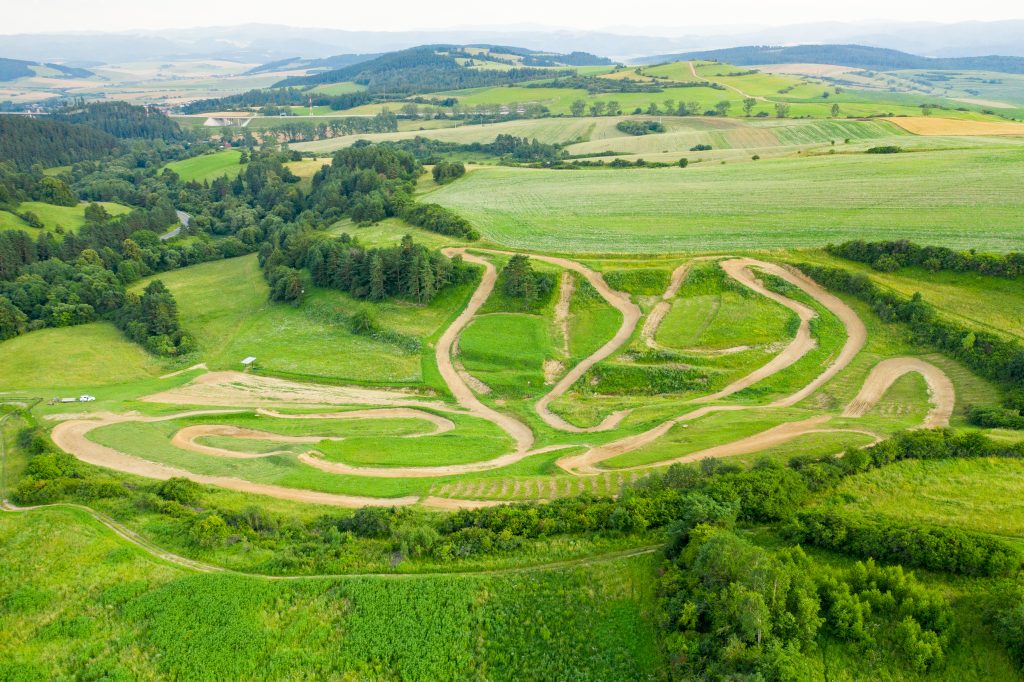
Why Build a Private Motocross Track?
The biggest advantage is simple: you can ride whenever conditions allow.
Instead of planning your weekends around opening hours, practice sessions or long drives, your training area is just outside your door.
A private track also allows you to:
- practice more consistently;
- improve specific techniques at your own pace;
- test suspension settings and bike setup;
- create drills for corners, braking or jumps;
- ride with family and friends in a controlled environment.
Many experienced riders use private tracks as technical playgrounds rather than race circuits. The goal isn’t necessarily to ride as fast as possible—it’s to ride better.
Bigger Isn’t Always Better
Many riders assume they need dozens of acres to build a worthwhile track.
That’s rarely true.
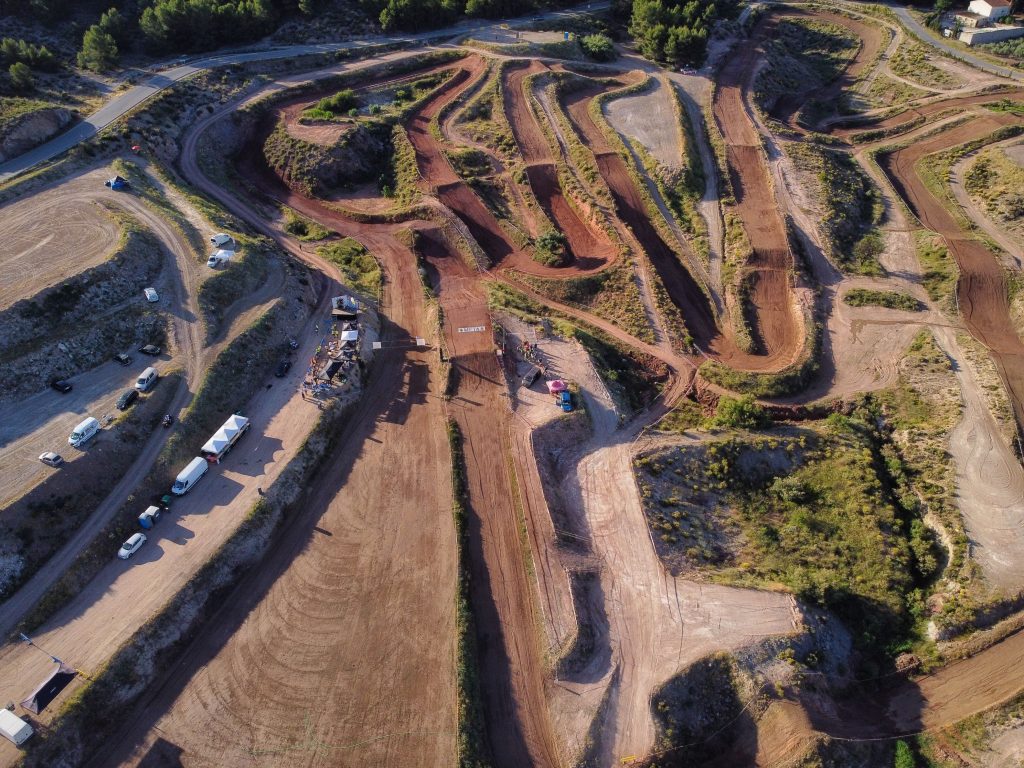
A compact but well-designed layout often provides far more technical value than a huge, high-speed circuit.
Instead of focusing on long straights, consider creating sections that constantly challenge your riding.
Tight corners.
Elevation changes.
Off-camber turns.
Small jumps.
Whoops.
Short technical climbs.
These features force you to work on balance, throttle control and body positioning—skills that transfer directly to both motocross and enduro riding.
The quality of the layout matters far more than its overall size.
Planning Your Private Motocross Track
Every piece of land is different.
Before moving any soil, spend time studying the natural shape of your property.
Rolling terrain usually requires much less excavation than completely flat ground and often results in a more interesting circuit.
When designing your track, consider including several different elements.
A Variety of Corners
Mix slow hairpins with faster sweeping turns.
Different corner types help improve braking technique, line choice and corner exits.
Progressive Jumps
One common mistake is building jumps that are too large too soon.
Smaller tabletop jumps allow riders of different skill levels to practice safely while still offering plenty of room for progression.
Technical Sections
Not every section needs to be ridden at high speed.
Whoops, ruts, uneven terrain and direction changes often improve riding technique more effectively than wide-open straights.
Proper Drainage
Water is one of the biggest enemies of any motocross track.
Carefully planned slopes and drainage channels help prevent erosion, standing water and expensive repairs after heavy rain.
Maintenance Never Ends
Building the track is only the beginning.
Every ride changes the surface.
Braking creates bumps.
Acceleration forms ruts.
Rain reshapes entire sections.
Without regular maintenance, even an excellent track quickly becomes unpleasant—or unsafe—to ride.
Typical maintenance includes:
- grading the riding surface;
- repairing braking bumps;
- maintaining jump faces and landings;
- removing exposed rocks;
- controlling vegetation;
- checking drainage after storms.
Frequent, light maintenance is usually easier and less expensive than major repairs later.
Safety Should Always Come First
Owning a private motocross track doesn’t remove responsibility.
Whether you’re riding alone or inviting friends, safety should always influence every design decision.
Good visibility, adequate run-off areas and sufficient space around obstacles can significantly reduce the consequences of mistakes.
Protective riding equipment should always be considered mandatory, regardless of rider experience.
If multiple riders use the track, establishing basic riding rules and clear communication helps prevent unnecessary accidents.
Can You Legally Build a Private Motocross Track?
This is probably the most important question—and the answer depends entirely on where you live.
Unlike many people assume, there isn’t a single set of rules that applies everywhere.
Regulations vary significantly between countries, regions and even local municipalities.
Before starting construction, several factors should be carefully investigated.
Land Use and Zoning
The first question is whether your property can legally be used for recreational motorised activities.
Local zoning regulations may restrict this type of use.
Environmental Restrictions
Protected landscapes, wetlands, forests and environmentally sensitive areas often have strict limitations regarding land modification and vehicle use.
Noise Regulations
Noise is one of the most common reasons private tracks encounter legal problems.
Even occasional riding may disturb nearby residents.
Many jurisdictions enforce specific noise limits or operating-hour restrictions.
Earthworks and Construction
Building a motocross track frequently involves excavation, grading and altering the natural terrain.
Depending on your location, these works may require permits or approval before construction begins.
Private vs Commercial Use
A track used exclusively by the property owner is often treated differently from one hosting organised events, paid coaching or regular public access.
Once money changes hands or the public is invited, additional regulations regarding insurance, safety and licensing may apply.
Before starting any project, always contact your local planning authority or municipality and seek professional advice where necessary. Regulations differ considerably from one location to another.
What About Enduro Riders?
Many riders wonder whether a private motocross track is useful for enduro training.
The answer is absolutely—but only up to a point.
Motocross helps develop excellent throttle control, balance, cornering technique and bike handling.
However, real enduro introduces challenges that are difficult to recreate on a traditional motocross circuit.
Natural rocks.
Tree roots.
River crossings.
Loose mountain trails.
Steep technical climbs.
Changing terrain.
These are the situations that truly develop adaptability—one of the most valuable skills for any enduro rider.
That’s why many experienced riders combine motocross practice with guided enduro tours on natural terrain.
The combination produces more complete, confident riders.
A Private Track Is Only Part of the Journey
Building a private motocross track can be an incredibly rewarding project.
Done properly, it provides years of riding, continuous skill development and countless hours of enjoyment.
But becoming a better rider requires more than repeating the same circuit over and over.
The greatest improvements happen when you expose yourself to different environments, changing terrain and new technical challenges.
Every new surface teaches something different.
Every unfamiliar trail expands your experience.
That’s why the world’s best off-road riders never stop exploring.
Keep Learning Beyond Your Own Track
A private motocross track is an excellent place to build consistency and refine your technique, but it shouldn’t be your only training ground.
Natural terrain constantly presents new challenges that no man-made circuit can fully replicate.
Riding through forests, rocky climbs, loose gravel, technical single tracks and coastal trails teaches adaptability—one of the defining characteristics of skilled enduro riders.
Whether you own a private track or simply dream of building one someday, the best way to continue improving is to keep riding in new environments.
Every ride becomes another lesson.
Every trail makes you a better rider.
Want to Learn More About Enduro?
👉 If you’d like to discover more riding tips, techniques and off-road adventures, explore the other articles on our blog. (In
👉 If you’re ready to take your riding to the next level, come and ride with us in Istria. Discover the package that suits you best and experience some of Croatia’s finest natural enduro terrain.