Enduro riding is often described as a sport of instinct, courage and experience. All three certainly matter, but they do not tell the whole story. Behind every successful climb, controlled descent and well-chosen line, there is a combination of physics, technique, timing and decision-making.
This is what we mean by the science of enduro riding.
The expression may sound technical, but the idea is simple. A rider improves more quickly when they understand not only what to do, but also why a technique works. Knowing why the rear tyre loses grip, why body position changes the behaviour of the motorcycle, or why vision affects line choice can help a rider correct mistakes more effectively than repetition alone.
Experience remains essential. However, experience becomes far more valuable when it is combined with understanding.
The Science of Enduro Riding Begins with How the Motorcycle Moves
An enduro motorcycle is constantly reacting to changes in weight, speed, terrain and rider input. Every movement of the body affects the balance of the bike, while every change in throttle or braking influences the amount of grip available at the tyres.
This is why the same motorcycle can feel stable and predictable in one moment, then nervous or difficult only a few metres later. The bike has not suddenly changed. The terrain, weight distribution or rider input has changed.
Learning to recognise these changes is one of the foundations of the science of enduro riding. It allows riders to stop treating every difficult section as an isolated problem and begin seeing common patterns instead.
A loose climb, a wet root and a rocky corner may look completely different, but they all ask the rider to manage grip, balance and momentum.
The Science of Enduro Riding and Traction
Traction is one of the most important subjects in enduro because it affects acceleration, braking, steering and stability. Yet many riders think of grip as something fixed: either the tyre has traction, or it does not.
In reality, traction is always changing.
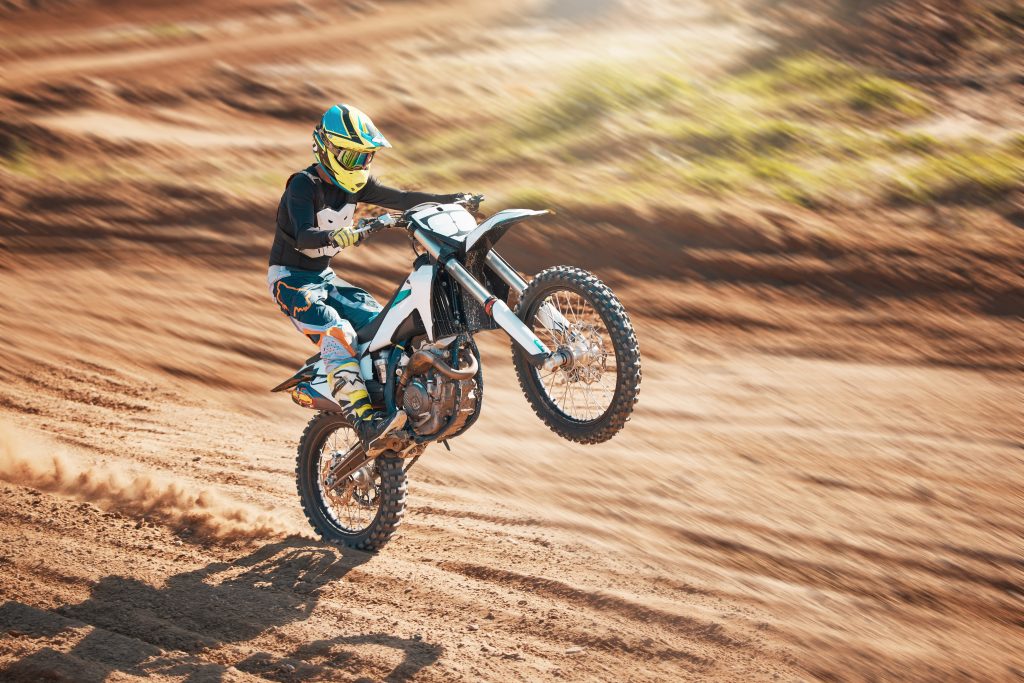
It depends on the surface, tyre condition, tyre pressure, suspension movement, motorcycle angle, throttle input and the position of the rider. A smooth throttle movement may preserve grip on loose ground, while a sudden input may cause the rear wheel to spin. Moving slightly forward can increase front-wheel contact, while shifting weight rearward may help the tyre find traction on a climb.
Good riders are not simply fortunate enough to find more grip. They are usually better at preserving the grip that is available.
This is one reason experienced riders often appear calm and controlled, even on difficult terrain. Their movements are rarely accidental. They are constantly adjusting the motorcycle without making those adjustments look dramatic.
How Different Surfaces Improve Enduro Riding Skills
Riding the same terrain repeatedly builds familiarity, but it can also create habits that only work in one environment. A rider who spends most of their time on hard, dry trails may feel comfortable there, yet struggle when faced with wet roots, loose stones or soft forest soil.
Different surfaces demand different responses.
Loose gravel encourages relaxed steering and teaches riders not to overreact when the motorcycle moves underneath them. Rocky terrain improves precision because poor line choice is quickly punished. Wet roots require smoothness and commitment, while mud teaches patience and careful throttle control. Sand often demands more momentum and a lighter touch on the handlebars.
The goal is not to master every surface immediately. The value lies in learning to adapt.
This adaptability is one of the most effective ways to improve enduro riding skills, because it gives riders a larger range of solutions. Instead of using the same technique everywhere, they begin selecting the right technique for the terrain in front of them.
The Science of Enduro Riding and Body Position
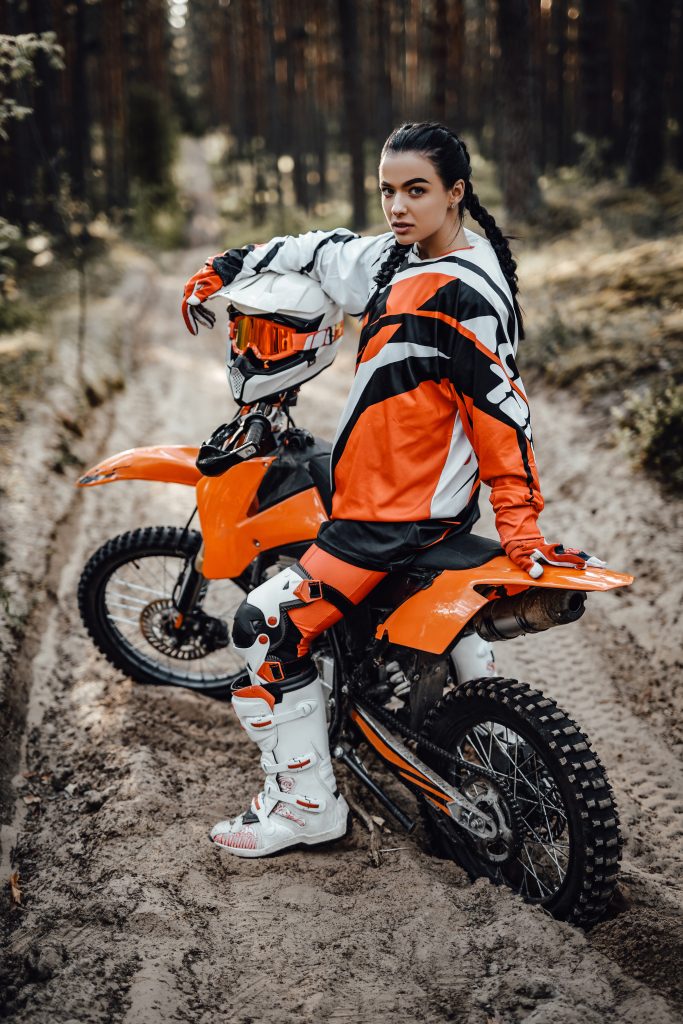
Body position is often discussed as though there were one ideal stance for enduro riding. In practice, good body position is not a fixed pose. It changes continuously.
When climbing, a rider may move forward to keep the front wheel under control while still allowing the rear tyre to find grip. On a descent, the body may move back slightly, but not so far that the front wheel becomes unloaded and difficult to steer. In a corner, the rider adjusts weight to help the motorcycle turn while maintaining balance and traction.
Standing on the footpegs is valuable because it allows the motorcycle to move independently beneath the rider. Bent knees and relaxed arms absorb movement more effectively than a rigid posture. This reduces fatigue and helps the tyres remain in contact with the ground.
Understanding body position is therefore not about copying how a professional rider looks in a photograph. It is about learning how body movement changes the behaviour of the motorcycle.
The Science of Enduro Riding and Vision
Vision is one of the least visible skills in enduro, but it has a major influence on how a rider moves through technical terrain.
Less experienced riders often look directly at the obstacle they are worried about. This narrows their attention and gives them very little time to plan what comes next. More experienced riders tend to look further ahead, gathering information earlier and preparing their body before they reach the difficult section.
This does not mean ignoring the obstacle. It means seeing it as part of a larger line.
When a rider looks ahead, the brain has more time to judge speed, direction, grip and possible escape routes. Many small corrections then happen naturally. The hands remain calmer, the body is better prepared and the motorcycle follows a more deliberate path.
Better vision often makes a rider appear faster, even when they are not taking greater risks. They are simply making decisions earlier.
The Science of Enduro Riding and Momentum
Momentum is another subject that is frequently misunderstood. It is often confused with speed, but the two are not identical.
Speed is how fast the motorcycle is moving. Momentum is the controlled movement that helps the motorcycle continue through an obstacle or difficult section.
A rider who approaches a climb too slowly may lose balance and traction before reaching the top. A rider who attacks it too aggressively may create unnecessary wheelspin. The most effective approach usually lies between those extremes: enough movement to carry the motorcycle forward, combined with controlled throttle and good body position.
The same principle applies to rocks, roots and small ledges. Smooth momentum reduces the need for sudden corrections and allows the suspension to work more effectively.
This is why skilled riders often seem to use less effort. They are not forcing the motorcycle through every obstacle. They are allowing well-managed movement to do much of the work.
Why Familiar Terrain Can Limit Progress
Local trails are useful because they allow riders to practise regularly and measure improvement. However, familiar terrain can also hide weaknesses.
When a rider knows every corner and obstacle, they may no longer be reading the trail. They are remembering it. This creates confidence, but not always adaptability.
New terrain removes that advantage. It forces the rider to assess grip, choose lines and make decisions in real time. It also reveals habits that may have gone unnoticed on familiar routes.
A rider who feels strong at home may discover that they rely too heavily on speed, avoid using the clutch properly, or become tense when the surface changes unexpectedly. These discoveries can be uncomfortable, but they are also extremely valuable.
Progress often begins when a rider encounters something unfamiliar and has to think again.
Why Istria Is a Natural Classroom for Enduro Riders
Istria offers an unusually varied riding environment within a relatively compact area. Riders can move from rocky limestone sections to forest trails, loose gravel tracks, technical climbs and open routes with views toward the Adriatic Sea.
This variety makes the region particularly useful for riders who want to improve enduro riding skills rather than simply cover distance.
The terrain changes often enough to prevent riders from settling into one rhythm. A technique that works well on compact soil may need to be adjusted only a few minutes later on loose stone or exposed rock. This encourages awareness and helps riders become more flexible in the way they use the motorcycle.
The benefit is not that Istria contains one uniquely difficult obstacle. It is that the landscape asks many different questions during the same ride.
What Riders Take Home After Experiencing Different Terrain
The improvements gained from varied terrain are often subtle at first. A rider may notice that they are using the clutch more smoothly, looking further ahead or choosing cleaner lines. They may feel less tense when the rear wheel moves or more comfortable when traction changes unexpectedly.
Over time, these small improvements combine.
Riders become more efficient because they waste less energy. They become more confident because they recognise familiar patterns in unfamiliar places. They also become safer because they are better able to judge when to continue, when to adjust and when to choose an easier line.
These are not skills that belong to one trail or one destination. They remain useful everywhere.
The Science of Enduro Riding Is About Better Decisions
Enduro will always involve instinct, emotion and the satisfaction of overcoming a difficult section. Understanding the technical side of riding does not remove any of that. It simply gives the rider more control over the experience.
The science of enduro riding is ultimately the study of better decisions: how to use available traction, where to place the body, when to maintain momentum, where to look and how to adapt when the terrain changes.
This article is the introduction to a broader series that will explore those subjects in more detail, including traction, body position, vision, momentum, braking, fatigue, hill climbs and rider confidence.
Each topic is different, but they all lead back to the same principle: riders improve when they understand what the motorcycle is doing and learn how to work with it rather than against it. Remember to come back next week for a new article.
And if you prefer to ride rather than read, just check out our tours in Croatia!