Rolling onto a motocross track for the first session of the day is a feeling every rider knows. The dirt is fresh, the corners are clean, and nothing has been chewed up yet. By the afternoon that same layout looks like a different planet. Whether you ride to race the local series or you just want to get through a practice weekend in one piece, learning to read a track is what separates a fast lap from a lucky one.
A track is never static. It shifts with every lap, shaped by the weather, the tyres rolling over it, and the throttle of every rider ahead of you. Riding one well means combining the fitness of an athlete with the eye of someone who keeps reading the surface lap after lap.
Reading the Dirt: What’s Actually Under Your Tyres on a Motocross Track
“Dirt” covers a huge range of surfaces, and you’ll often find several of them on the same layout depending on where the sun hits and how the track was prepped.
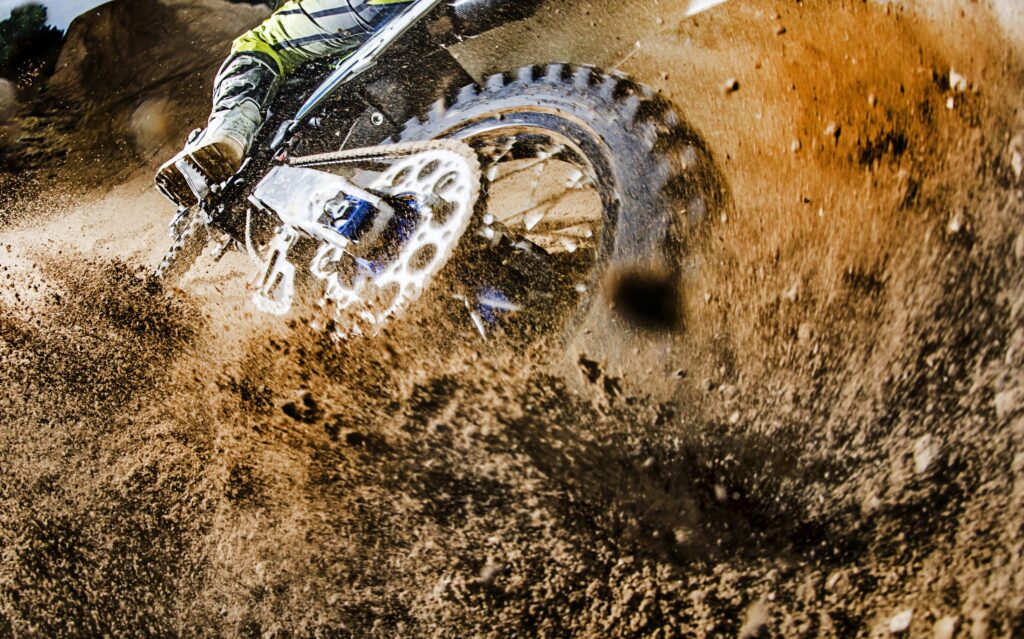
Loam is the surface everyone hopes for. Soft and grippy, it lets the tyres dig deep into corners and gives you traction to spare, though it ruts up quickly once a few riders have carved their lines into it. Hardpack is the opposite, common on dry summer days, and it punishes anyone heavy on the throttle. On hardpack you ride smoother and often a gear higher, keeping the rear wheel driving rather than spinning. Then there’s mud and sand, each demanding its own approach: in the wet you lower tyre pressure, stay relaxed, and avoid grabbing a fistful of brake; in sand you sit back, keep your momentum up, and let the bike float rather than fighting it.
The first few laps of any session are reconnaissance. Notice where the ruts are forming, where the surface of a motocross track is drying out, and which corners are already starting to break down. That picture changes hour by hour, and the riders who keep updating it are the ones still setting clean laps when everyone else is getting caught out.
Cornering: The Art of the Line

Most laps are won or lost in the turns. Coming into a corner you generally have three options, each with a trade-off.
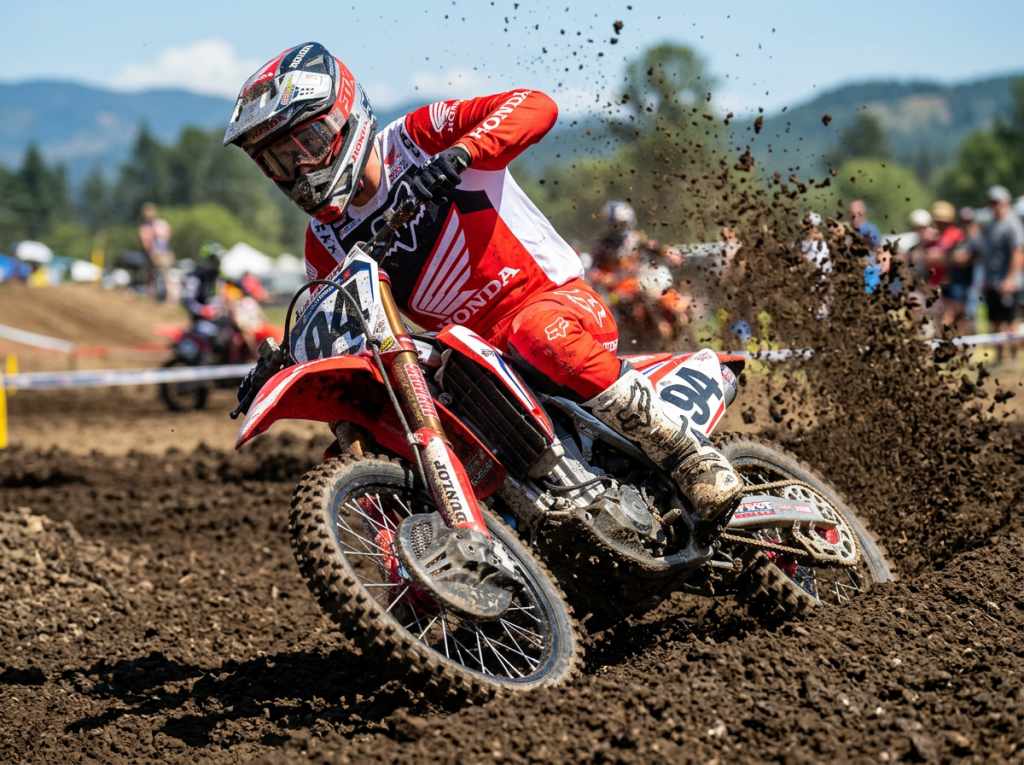
The inside line of a motocross track is the shortest way around. It’s tight, it blocks anyone trying to pass you, but it demands real balance and precise braking. To make it work, drop your weight onto the outside footpeg and slide your inside leg forward and high, up near the radiator shroud, so the front tyre bites instead of washing out.
The middle line is the smooth, flowing option. You give up a little distance for better momentum and a cleaner exit, which often pays off more than the tight inside ever will.
The outside berm is the high-speed choice. You sweep wide and let the banked dirt hold you, carrying maximum speed onto the straight or into the next rhythm section. It only works if the berm has enough support and traction to hold your weight, so read it before you commit.
There’s no single correct line. The fast riders switch between all three depending on how the corner has worn, where they need to set up for the next obstacle, and whether someone is breathing down their neck.
Obstacles: Jumps, Whoops, and Rollers
The jumps and the whoops on a motocross track are what make a track look intimidating, and they’re where most riders either find time or find trouble.
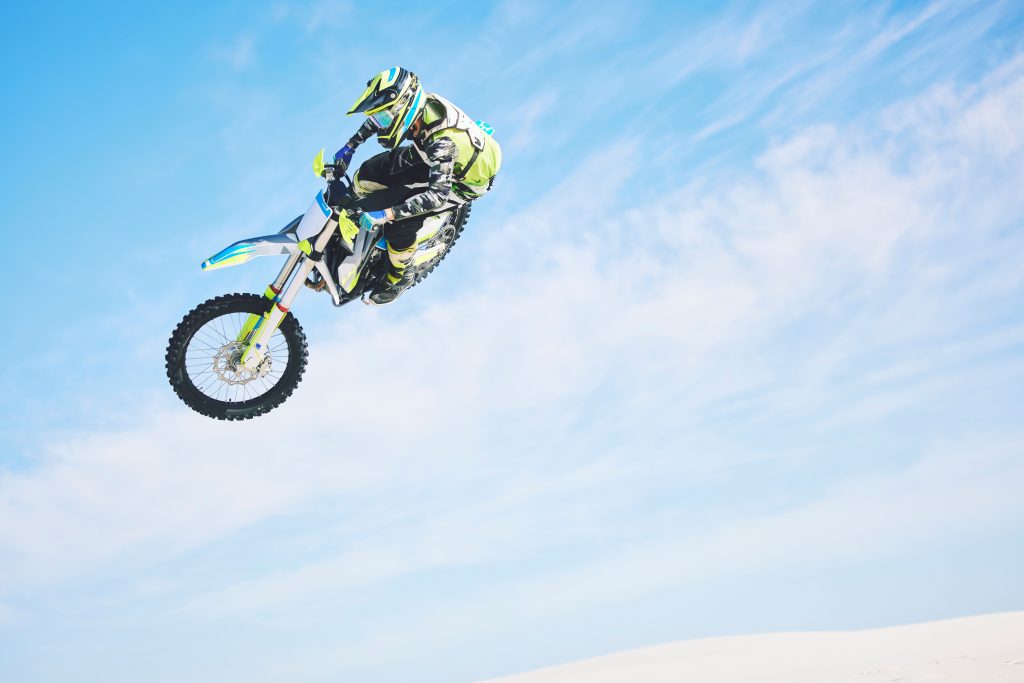
On a jump, the secret is a steady, consistent throttle from the approach through the lip. Roll off suddenly and the bike noses down; panic-rev at the last second and it loops out behind you. Smooth and committed beats fast and frantic every time. Whoops, those repetitive rows of small mounds, work differently. The instinct is to slow down and roll through them, but that often makes things worse. Keep your weight back, grip the bike firmly with your knees, stay loose through the arms, and let the suspension do its job underneath you.
Track Etiquette and Safety
However hard you’re pushing, the basics of track safety never change, and most of them come down to being predictable. The golden rule is to hold your line. When you ride where a faster rider expects you to ride, they can plan a clean pass and everyone stays upright. Swerving unpredictably is how collisions happen.
| Track Scenario | What to Do | Why It Matters |
|---|---|---|
| Entering or exiting | Use the access points and look both ways | Avoids a high-speed collision with riders already on track |
| A faster rider closing in | Hold your line predictably, don’t panic-swerve | Lets them anticipate your path and pass safely |
| Yellow flag shown | Slow down, keep your position, don’t jump | Signals a fallen rider or hazard on the layout ahead |
Beyond that, it’s the obvious stuff done consistently: don’t cut across lanes, don’t launch a jump blind when a flag is out, and keep your eyes up and looking ahead rather than fixating on your front fender. Where you look is where you go.
Take It From the Motocross Track to the Trail
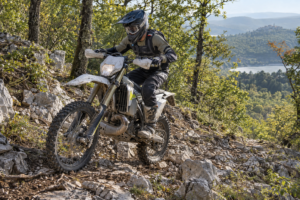
Master these fundamentals on a closed motocross track and they translate directly to the open terrain of real enduro riding, where the dirt changes not lap by lap but corner by corner, and there’s no groomed berm waiting for you. Reading the surface, choosing your line on the fly, and staying loose over rough ground are exactly the skills that make a day on Istrian trails so rewarding.
Want to put it into practice on real terrain? We run guided enduro tours through the hills and forests of Istria, Croatia, for riders of every level, from first-timers finding their feet to experienced racers looking for fresh trails. If you’d like to train these skills somewhere genuinely beautiful, come and ride with us. Get in touch and plan your tour.
Want to dial in your machine for these conditions? Read our guide to suspension setup basics, and if you’re weighing up your options, see our breakdown of enduro vs motocross to understand how the two disciplines differ.