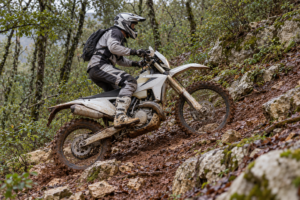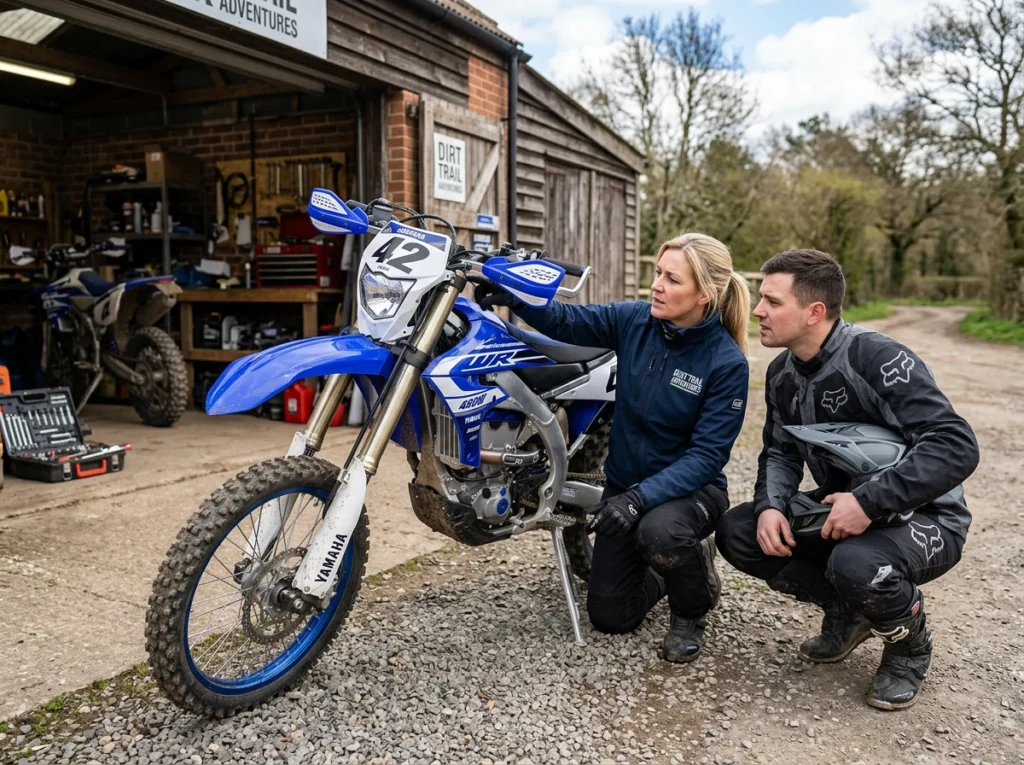
Renting a motorcycle can turn a complicated enduro trip into a fairly simple one. You arrive with your riding clothes, meet the guide and find a prepared motorcycle waiting for you. There is no trailer to tow across several countries, no extra fuel bill for the van and no evening spent checking straps in a hotel car park.
When everything has been organised well, an enduro bike rental allows you to concentrate on the reason you travelled in the first place: riding unfamiliar terrain.
The problems usually begin when the rider and the rental company have made different assumptions.
The rider expects fuel, protective equipment and trail assistance to be included. The operator assumes the rider knows these are charged separately. Someone books a powerful motorcycle because it sounds exciting, then discovers that its height or power delivery makes a technical day unnecessarily tiring. A small scratch appears on a handguard, and only then does anyone ask how damage is assessed.
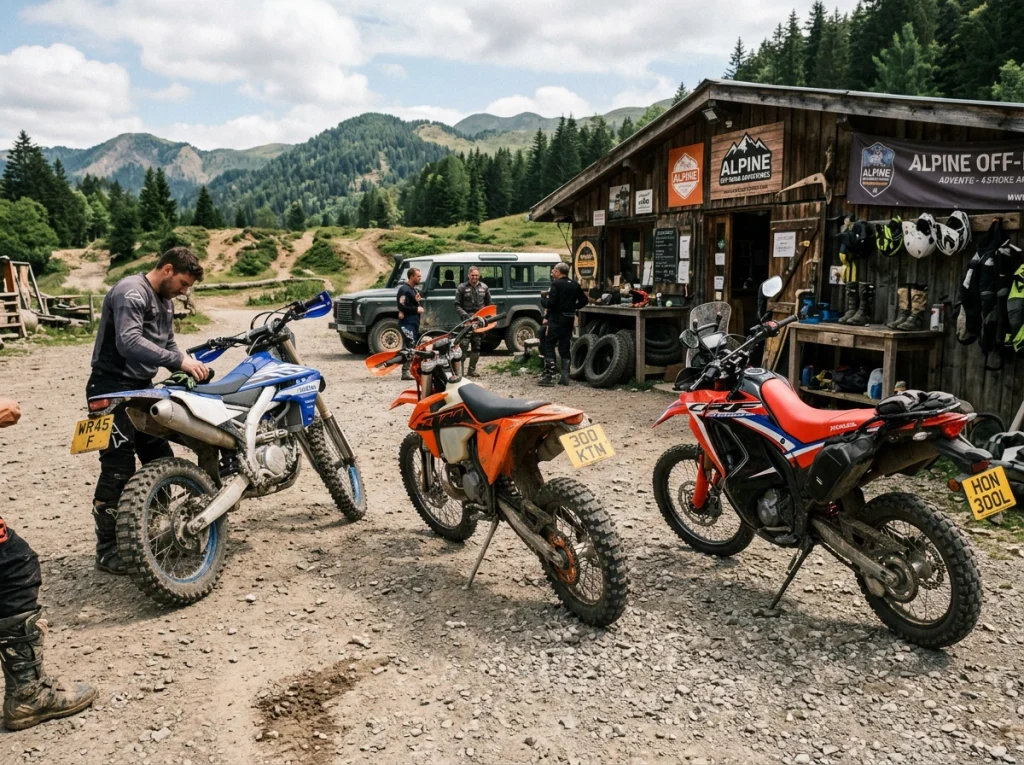
Most of these situations can be avoided before the booking is confirmed. You do not need to send the operator a questionnaire with fifty items. You do need clear answers about the motorcycle, the route, the price and what happens if the day does not go entirely to plan.
What should you check before renting an enduro bike?
Before booking an enduro bike rental, confirm five things: which motorcycle you will receive, what the price includes, how the damage policy works, what mechanical support is available and whether the route suits your experience.
Those five points reveal far more than a photograph of a clean motorcycle on a booking page.
A rental company that knows its motorcycles and trails should be able to explain them without hiding behind vague descriptions. You should know whether you are booking a specific model or merely a motorcycle from a general category. You should also understand who is responsible for fuel, repairs, recovery and damage before you arrive.
Make sure you are renting the right kind of motorcycle
The term “enduro motorcycle” covers machines with very different characters.
A 300 cc two-stroke, a 250 cc four-stroke and a 450 cc four-stroke may all appear in an enduro rental fleet, but they do not create the same riding experience. Engine response, weight, engine braking and physical effort vary considerably.
The best choice is not necessarily the model that resembles your motorcycle at home. The terrain matters just as much. A motorcycle that feels ideal on wide, flowing tracks may become tiring on tight woodland trails. A light two-stroke may be easier to recover on a difficult slope, while a progressive four-stroke can feel reassuring to a rider who prefers predictable torque.
Tell the operator:
- what you normally ride;
- how many years of off-road experience you have;
- which terrain you ride most often;
- whether you are comfortable with two-stroke and four-stroke engines;
- your height and approximate weight;
- whether you have any physical limitations or previous injuries.
A good operator uses this information to recommend a suitable motorcycle. “Experienced rider” alone says very little. Someone with twenty years of road experience and three weekends on loose terrain has different needs from a rider who has spent five years competing in enduro events.
If you are unsure which engine type would suit you, our comparison of two-stroke and four-stroke enduro motorcycles explains how each behaves on climbs, descents and technical terrain.
Ask whether the model is guaranteed
Some websites show one motorcycle prominently while the rental agreement only promises a motorcycle of a similar class. This is not automatically a problem. Fleet availability changes because of maintenance, previous damage and the number of riders in a group.
It should, however, be clear before you pay.
Ask whether the reservation guarantees a particular model, engine capacity and engine type. If substitutions are possible, find out what the alternatives may be. Moving from one recent 300 cc enduro to a comparable model is very different from arriving to discover a change in engine capacity, seat height or transmission characteristics.
For a group booking, confirm whether everyone will receive the same model. A mixed fleet can work perfectly well, but it affects spare parts, fuel requirements and the way the guide manages the day.
Fit matters more than most riders expect
A technically suitable motorcycle can still feel wrong if the controls are difficult to reach or the suspension is completely unsuited to the rider.
When you rent an enduro bike, ask whether the operator can adjust lever position, handlebar controls and suspension preload. Small changes can make the difference between feeling comfortable and spending the entire day fighting the motorcycle.
Shorter riders may be concerned about seat height. In enduro, touching the ground with both feet is less important than many beginners assume, but a motorcycle that feels excessively tall can reduce confidence during stops, tight turns and restarts on slopes.
Taller riders may need more room when standing. They should still avoid assuming that handlebar risers are always the answer. Excessive riser height can affect the rider’s ability to move forward and load the front wheel. The operator should be able to assess the position rather than making a large adjustment based only on height.
If your group contains riders with significantly different weights or experience, ask whether the motorcycles can be allocated accordingly. The same setup will not feel equally balanced for everyone.
Look beyond the age of the motorcycle
Riders often ask for the year and mileage of a rental motorcycle. Those are reasonable questions, although they do not tell the whole story.
An older motorcycle maintained by an experienced mechanic may be more reliable than a newer one that has passed through many hands without proper checks. Enduro motorcycles live a demanding life. What matters is how the operator inspects and maintains them between tours.
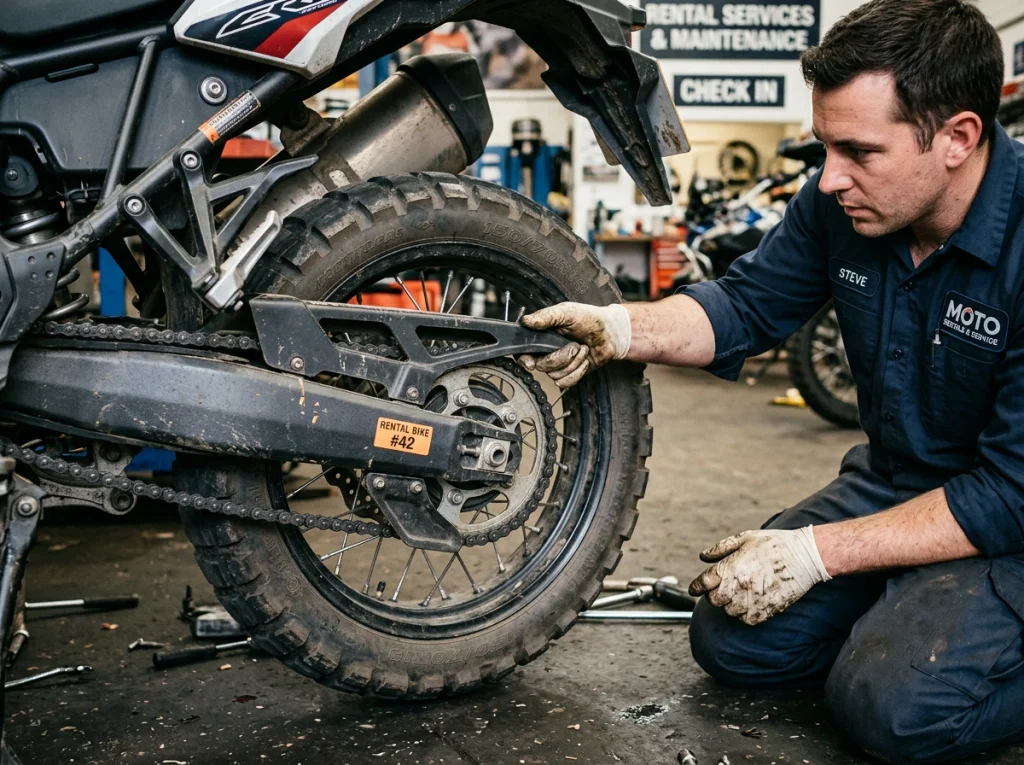
You do not need access to the workshop records, but you can ask how often the motorcycles are serviced and whether they are checked before every riding day. Pay particular attention to tyres, brakes, chain, controls and signs of fluid leakage.
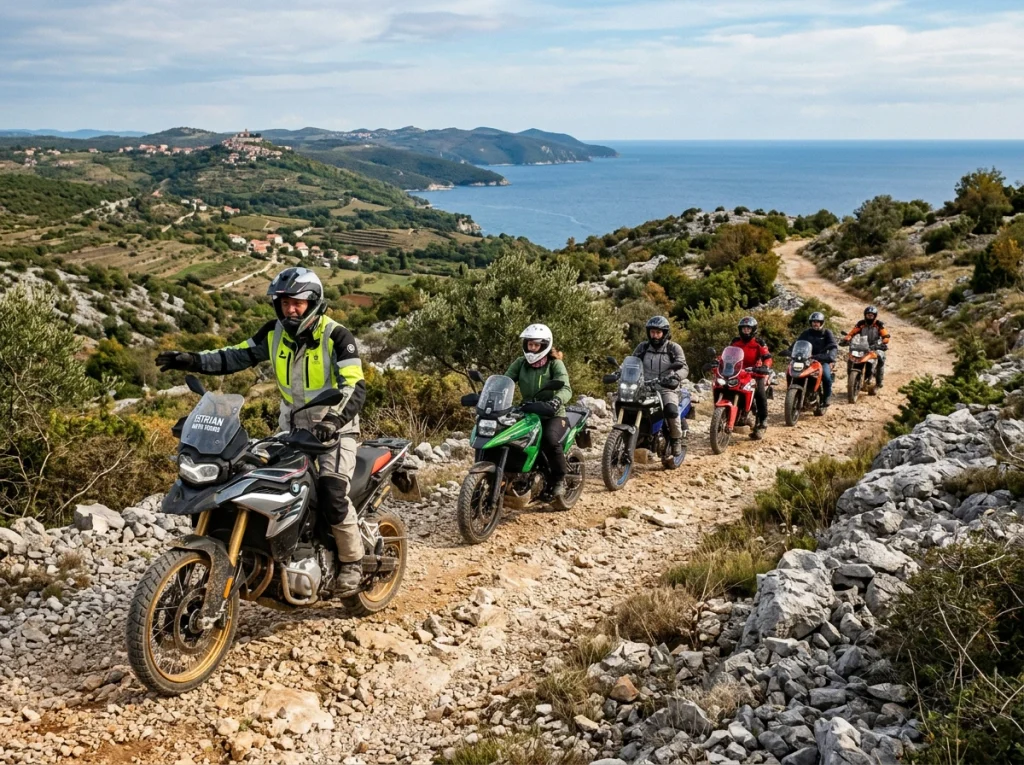
Before leaving, walk around the motorcycle with a member of staff. Check that both brakes operate, the throttle closes freely, the levers are secure and the tyres are appropriate for the planned terrain. Look at the chain and sprockets, then make sure there are no obvious leaks or loose components.
The Motorcycle Safety Foundation’s T-CLOCS pre-ride inspection checklist covers tyres and wheels, controls, lights and electrics, fluids, chassis and stands. It was designed as a broader motorcycle check, but its structure provides a useful starting point when inspecting a rental motorcycle. Motorcycle Safety Foundation
A serious operator will not be offended by a careful inspection. It protects both sides by identifying the motorcycle’s condition before the ride begins.
Find out exactly what the rental price includes
Two offers that look similar can cover very different services.
One enduro motorcycle hire price may include the motorcycle, fuel, guide, accommodation, meals, mechanical assistance and basic damage protection. Another may cover only the motorcycle itself.
Before comparing prices, ask for the complete amount you are likely to pay. Check whether the following are included:
- fuel;
- lubricants and normal maintenance;
- guide services;
- protective equipment;
- accommodation and meals;
- trail permits or access fees, where applicable;
- support and motorcycle recovery;
- transport to the starting point;
- taxes;
- cleaning;
- security deposit;
- damage waiver or insurance.
This is one of the places where a lower advertised price can become less attractive. Paying separately for fuel, equipment, support and transport may take the final cost well above a more complete package.
Ask what “full day” means as well. It could describe a fixed number of riding hours, a morning-to-afternoon programme with breaks, or simply the maximum period during which the motorcycle is available.
Understand the deposit and damage policy
Enduro motorcycles will collect signs of use. Mud, light boot marks and minor contact with vegetation are part of normal trail riding. Broken components and crash damage are different matters.
The boundary between the two should be explained in writing.
Before confirming an enduro bike rental, ask:
- Is a deposit required?
- How much is it?
- How is it paid or pre-authorised?
- When is it released?
- What counts as normal wear?
- Who pays for broken levers, plastics, handguards or engine covers?
- Is there a maximum amount for which the rider can be held responsible?
- Does the policy change if the rider ignores the guide’s instructions?
- What happens if another participant damages the motorcycle?
Do not rely on the word “insured” without asking what the insurance covers. A policy may cover third-party liability on public roads without covering damage to the rented motorcycle during off-road use. There may also be exclusions for racing, unauthorised trails, reckless behaviour or riding outside the agreed programme.
If an optional damage waiver is offered, ask what it reduces and which components remain excluded.
Take photographs of the motorcycle before departure, ideally with a member of staff present. Record existing scratches, bent plastics or other visible marks. Repeat the process when returning it if any disagreement seems possible.
Clear documentation does not make the relationship less friendly. It prevents a good trip from ending with an avoidable argument.
Check what happens after a mechanical problem
Even a well-maintained motorcycle can suffer a puncture, damaged lever or mechanical failure on the trail. The important question is how the operator responds.
Ask whether the guide carries tools and common spare parts. Find out if the company has a workshop, mechanic or replacement motorcycle available. On remote routes, ask how a disabled motorcycle would be recovered.
Mechanical support becomes particularly important during a multi-day guided enduro rental. Losing an afternoon is frustrating; losing the remainder of a three-day tour because no alternative motorcycle exists is much worse.
Clarify whether time lost to a mechanical failure is refunded, extended or replaced. The answer may depend on availability and the cause of the problem, but the policy should be understandable.
At Enduro Experience Croatia, guided packages include assistance during the tour, and the operator has its own workshop and mechanical support. Rental motorcycles are included as an option within the published packages rather than treated as a completely separate service. enduroexperience-croatia.com
A guide is part of the rental experience
A motorcycle alone is not enough if you do not know where you can legally and safely ride.
Self-guided rental may suit an area with clearly marked routes and reliable navigation. In many enduro destinations, the useful trails are harder to identify. Access can depend on local restrictions, seasonal conditions, forestry work and relationships with landowners.
A local guide knows more than the way. The guide sees when a trail has become too wet, when a climb is beyond the group’s current level and when a fallen tree has changed the route. They can also shorten or extend the day according to fatigue.
When considering a guided rental, ask how groups are formed. A rider who wants flowing trails and a relaxed holiday should not automatically be placed with a group seeking extreme climbs. Mixed ability levels can work when the guide has alternative lines and the group understands the plan, but large differences often reduce everyone’s enjoyment.
Find out whether your group will have a dedicated guide or be combined with other customers. This affects the pace, route choice and amount of individual attention you receive.
Describe your level honestly
Rental companies regularly receive descriptions such as “intermediate,” “advanced” or “expert.” These words mean different things in different countries and riding communities.
A more useful description includes the terrain you can ride confidently. For example:
I ride enduro twice a month. I am comfortable on rocky trails, moderate climbs and shallow river crossings, but I struggle with logs and very steep restarts.
That gives the operator something practical to work with.
Do not exaggerate your level because you are worried about receiving an easy route. A good guide can increase the difficulty during the day. Beginning with terrain far above the group’s ability creates fatigue, motorcycle damage and avoidable risk.
It is equally important not to understate your experience if you want a technical tour. The operator needs enough information to plan a day that will remain interesting.
Ask about protective equipment before travelling
If riding equipment is available to rent, ask what “complete equipment” includes. Ideally, the operator should specify helmet, goggles, boots, body protection, knee protection, gloves and riding clothing.
Confirm your sizes early, particularly for boots and helmets. “Large” does not fit the same way across every brand, and an uncomfortable helmet becomes difficult to ignore after several hours.
If luggage space allows, many riders prefer to bring the items whose fit matters most: helmet, boots, knee braces and gloves. Rental equipment remains useful for fly-in trips, but personal gear offers familiar pressure points and control feel.
Ask how the equipment is cleaned, dried and inspected. A helmet with a recent appearance may still have suffered an impact, while worn boots can reduce ankle support or allow water inside.
If you are preparing for a multi-day trip, our enduro tour packing list explains which personal items deserve luggage space and what can normally remain at home.
Confirm the licence and document requirements
Document requirements depend on the destination, motorcycle and routes used during the tour.
Ask whether you need a valid motorcycle licence and whether an international driving permit is required for your country of residence. Find out if the motorcycle is road registered and whether the itinerary includes public-road transfers.
You may also need to provide:
- a passport or national identity card;
- a valid motorcycle licence;
- insurance information;
- a credit or debit card for the deposit;
- emergency contact details;
- a signed rental and liability agreement.
Send a copy of your licence in advance if requested, but use the operator’s official communication channel. Do not assume that previous competition experience replaces a legally required licence for road sections.
Check the cancellation and weather policy
Enduro tours depend on conditions, but rain does not automatically cancel the riding. In many areas, wet ground is part of the experience and can make familiar trails more technical.
Severe weather, fire risk, flooding or local access restrictions may nevertheless require changes.
Before booking, ask what happens if the planned route cannot be used. A professional operator may select a different area, adapt the terrain or move the riding schedule. You should also understand what happens if conditions prevent riding entirely.
Read the cancellation rules for both sides. Check:
- how much deposit is required;
- whether it is refundable;
- whether dates can be moved;
- what happens if a rider becomes ill;
- whether travel insurance is recommended;
- what happens if the operator cancels;
- whether unused riding days can be credited.
These questions are easier to discuss before money changes hands.
Notice how the operator communicates
You can learn a great deal from the booking process itself.
An operator does not need to reply within five minutes, particularly if the guides are out riding. The answers should still be clear and specific. If straightforward questions about the motorcycle, deposit or damage policy repeatedly receive vague replies, the situation is unlikely to become clearer after arrival.
Good communication also works in both directions. Provide accurate information about the group, preferred dates, rider level, height, equipment needs and number of rental motorcycles required.
If someone in the group is a beginner, returning from an injury or uncomfortable with a certain type of terrain, say so. This gives the operator time to prepare an appropriate motorcycle and route.
Enduro bike rental checklist before booking
Before paying the deposit, confirm:
- Motorcycle model, engine type and capacity
- Whether the model is guaranteed
- Rider height, weight and control setup
- Rental duration and daily riding hours
- Fuel and normal maintenance
- Protective equipment and available sizes
- Guide and group arrangement
- Mechanical assistance and recovery
- Deposit and damage responsibility
- Insurance and important exclusions
- Required licence and documents
- Accommodation, meals and transport
- Cancellation and weather policy
- Final price, including taxes and extras
You should receive the important conditions in writing. A message or email is enough if it states the terms clearly.
The right rental should remove complications
A good enduro bike rental should make the trip easier from the moment you begin planning it. You know which motorcycle will be waiting, what equipment you need to bring and how the day will be organised. The price is understandable, the damage conditions are clear and help is available if something goes wrong on the trail.
That clarity matters more than finding the lowest daily rate.
The motorcycle must suit your size, experience and terrain. The guide must understand what kind of riding your group wants. The support behind the rental must be strong enough that a puncture or broken lever does not bring the entire trip to an end.
Ask direct questions and pay attention to the quality of the answers. A professional operator will understand why you are asking. In most cases, they would rather clarify everything before the tour than deal with a misunderstanding halfway through it.
If you are considering an enduro bike rental in Croatia, explore the Enduro Experience Croatia packages. The available options combine KTM rental motorcycles with guided riding, accommodation, meals and assistance during the tour, allowing the group to organise the main parts of the trip through one operator. enduroexperience-croatia.com
Frequently asked questions
What should I check before renting an enduro bike?
Confirm the motorcycle model, engine capacity, rental inclusions, deposit, damage policy, insurance, protective equipment and mechanical support. You should also check whether the route and group match your riding experience.
How much does an enduro bike rental cost?
The cost depends on the destination, motorcycle, number of riding days and services included. A motorcycle-only price cannot be compared directly with a package that includes a guide, fuel, accommodation, meals and trail assistance. Ask for the expected total price before booking.
Is fuel included in enduro motorcycle hire?
Sometimes, but not always. Fuel may be included in a guided package or charged according to consumption. Confirm this before booking, especially with two-stroke motorcycles that may also require oil.
Do I need a motorcycle licence to rent an enduro bike?
Requirements vary by country and itinerary. If the motorcycle is road registered or the tour uses public roads, a valid motorcycle licence will normally be relevant. Ask the operator which licence and documents apply to the specific tour.
Can beginners use an enduro bike rental?
Yes, provided the operator offers suitable motorcycles, routes and guidance. Beginners should describe their actual off-road experience and ask whether instruction or an easier route is available.
What happens if I damage a rented enduro motorcycle?
Responsibility depends on the rental agreement. You may pay for specific damaged components, lose part of a deposit or be covered by a damage waiver up to certain limits. Read the damage policy and exclusions before riding.
Is a guided enduro rental better than renting a motorcycle alone?
A guided rental is usually more convenient in an unfamiliar region. The guide selects legal and suitable trails, adapts the route to conditions and can help after a mechanical problem. A motorcycle-only rental may suit riders who already know the area and permitted routes.
Can I choose between a two-stroke and four-stroke rental?
This depends on the operator’s fleet and availability. Ask before paying the deposit, especially if you strongly prefer one engine type. Describe your experience and typical terrain so the operator can recommend a suitable option.