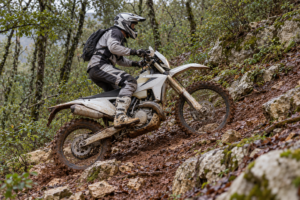
Spend enough time riding with different groups and you begin to recognise two kinds of enduro rider.
The first stands almost everywhere. He has been told that proper off-road riders stay on the footpegs, so he remains standing through smooth tracks, open transfers and every easy corner. By midday, his legs are tired, his shoulders have tightened and he is hanging from the handlebars.
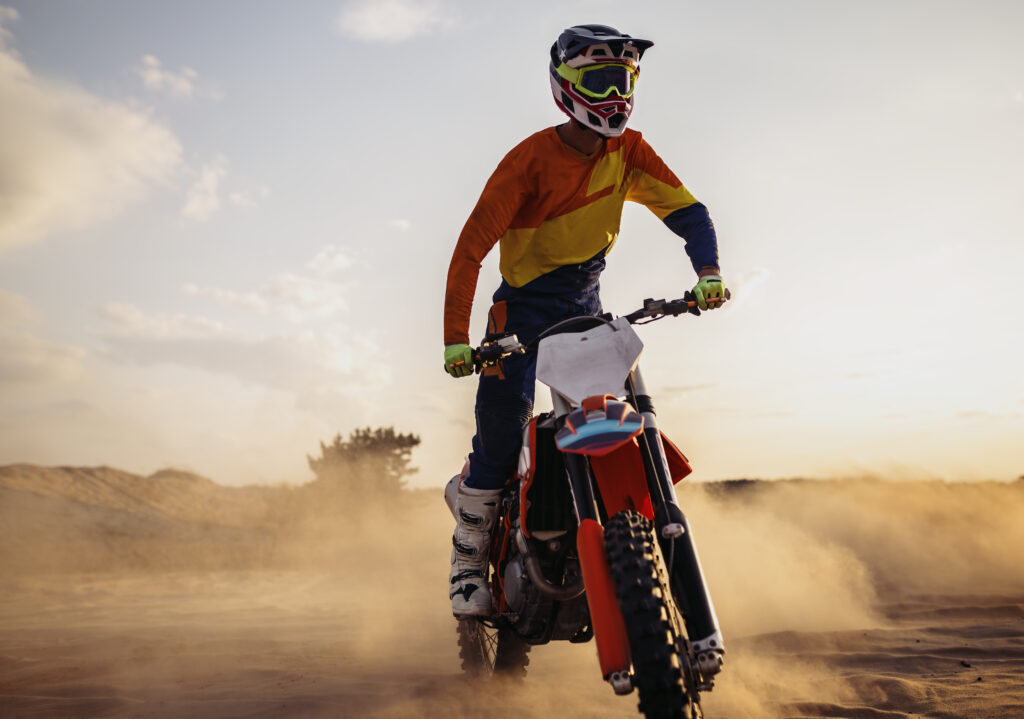
The second sits whenever the terrain allows it, and often when it does not. He stays on the seat as the motorcycle crosses rocks, holes and roots, absorbing every impact through his back and giving the motorcycle very little freedom to move.
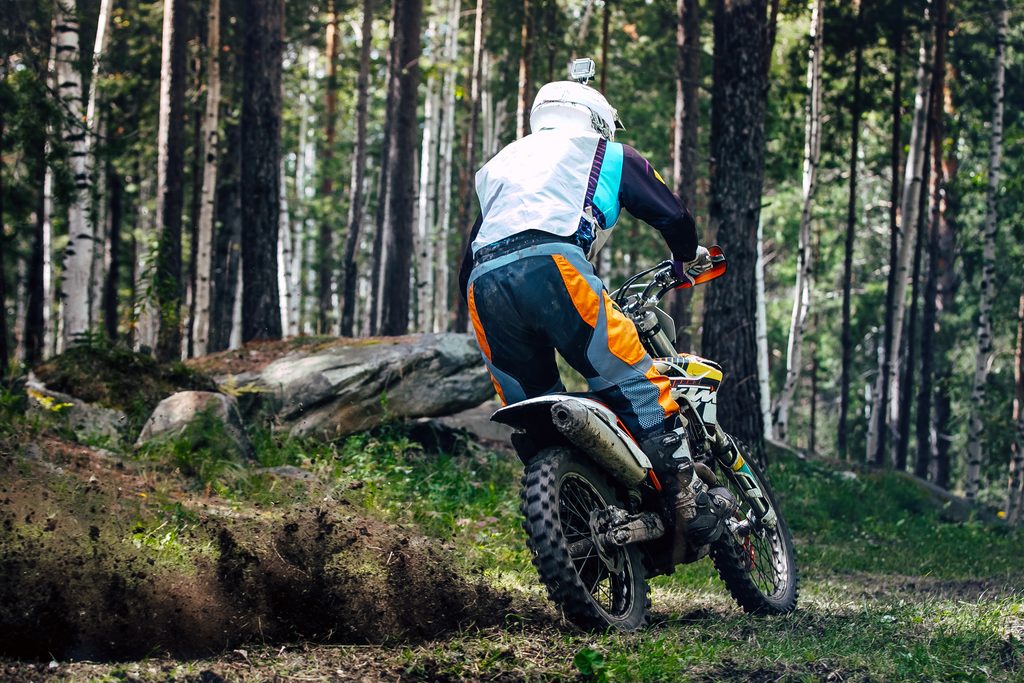
Neither rider is completely wrong. Standing is an essential enduro skill, but sitting also has an important place. A good enduro riding position is not one posture held from the beginning of the trail to the end. It changes with the terrain, the speed, the available grip and what the motorcycle needs to do next.
The real skill lies in recognising when to move.
There is no single correct enduro riding position
When beginners ask whether they should stand or sit, they often expect a simple rule. Standing is better for difficult terrain; sitting is more comfortable on easy ground.
That is a useful starting point, but real trails are more complicated. A rocky section may include a tight turn where sitting briefly gives you better control. A smooth track may contain a sudden hole that is easier to absorb from the footpegs. A slippery climb may require several transitions as you search for traction.
Instead of treating standing and sitting as opposing techniques, think of them as two tools. Each changes how your weight reaches the motorcycle and how freely the motorcycle can move beneath you.
While standing, your weight is carried mainly through the footpegs. Your legs can absorb impacts, and the motorcycle has more freedom to move without throwing your upper body in the same direction.
While sitting, more of your weight is concentrated on the seat. This can improve rear-wheel grip, reduce physical effort and help the motorcycle turn in certain situations. The disadvantage is that impacts are transferred more directly into your body and it becomes harder to separate your movement from that of the motorcycle.
The right choice depends on what is happening beneath the tyres.
What a good standing position feels like
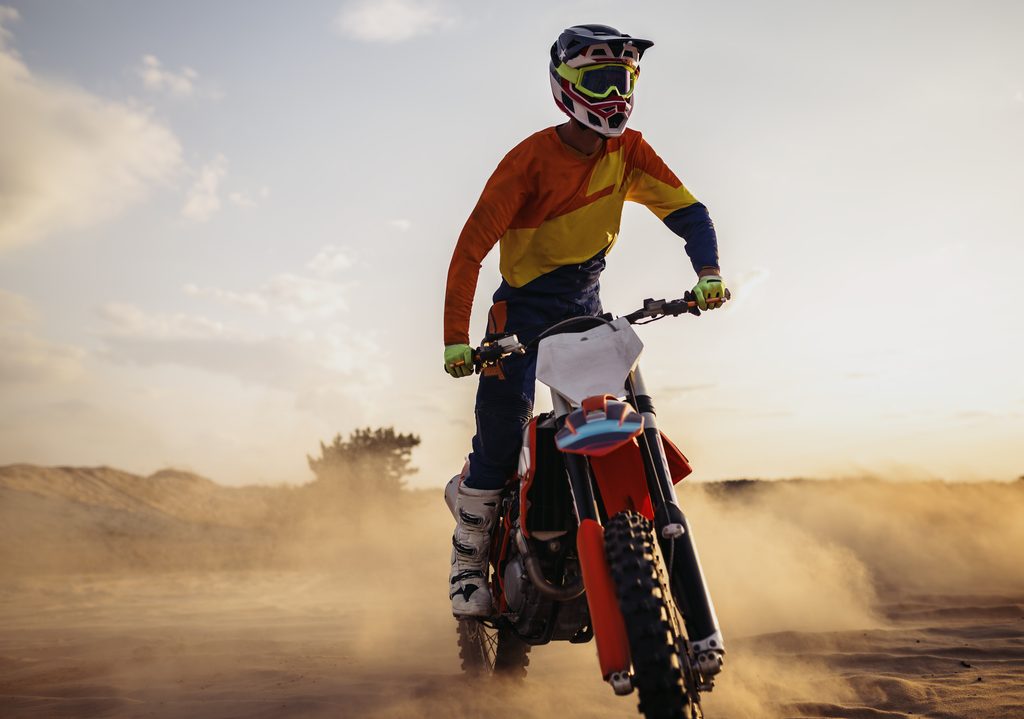
Standing on a dirt bike does not mean straightening your legs and lifting your body as high as possible. That position raises your centre of mass, limits your ability to absorb impacts and usually causes you to pull on the handlebars.
A useful standing position feels athletic rather than rigid. Your knees and hips remain slightly bent, your feet stay active on the pegs and your upper body is relaxed enough to respond when the motorcycle changes direction.
Your head should remain up, with your eyes looking towards the next part of the trail rather than directly at the front wheel. The elbows are comfortably raised, but not forced into an exaggerated position. Your hands guide the controls without supporting your entire body weight.
The knees can make light contact with the motorcycle, although squeezing as hard as possible throughout the ride quickly becomes exhausting. The amount of pressure changes according to the terrain. On a fast, rough section, some contact helps stabilise the body. In a slow technical passage, the motorcycle may need more freedom to lean and move between the legs.
The Motorcycle Safety Foundation includes correct standing posture and lower-body control among the fundamental skills taught in its off-road DirtBike School. This reflects how central body position is to safe and effective motorcycle control away from paved roads. Read about the MSF DirtBike School. Motorcycle Safety Foundation
Why the footpegs matter so much
Many riders think about body position mainly in terms of hips, knees and shoulders. The movement often begins much lower.
Your feet are one of the most important points of contact with the motorcycle. Pressure through the footpegs can help influence balance, support changes of direction and keep your upper body from doing unnecessary work.
Where possible, support your weight through the broader front or middle part of the foot rather than riding permanently on the arches with the toes hanging down. This gives the ankles room to move and reduces the risk of a foot catching on rocks, roots or deep ruts.
You will still need to move the foot forward to operate the rear brake or gear lever. Once the input is complete, bring it back to a stable position instead of leaving the toe pointing towards the ground.
A good enduro body position feels connected through the feet. If your hands are doing all the work, there is a good chance that your feet, legs and hips are not contributing enough.
When standing gives you more control
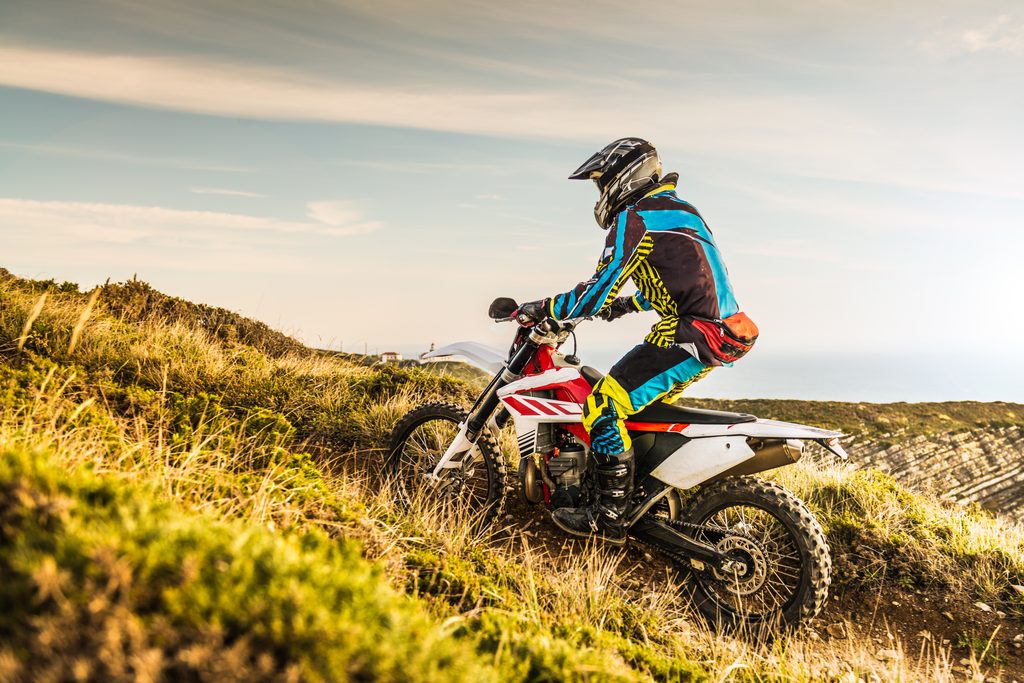
Standing becomes especially useful when the ground is rough enough to move the motorcycle sharply beneath you.
Across rocks, roots, holes and repeated bumps, bent legs work like an additional suspension system. The motorcycle can rise, drop or move sideways while your head and upper body remain relatively stable. This makes it easier to look ahead and continue choosing a line.
Standing is also helpful when you need to move your weight quickly. On a climb, you can bring your upper body forward to keep the front wheel controlled. During a descent, you can allow your hips to move farther back while keeping enough weight on the front wheel to steer.
Other situations in which standing commonly helps include:
- rocky or heavily rutted trails;
- water crossings with an uneven bottom;
- loose climbs;
- steeper descents;
- sand and soft ground;
- logs, ledges and similar obstacles;
- sections with repeated holes or bumps;
- moments when you need to see farther along the trail.
Standing also gives you a clearer view over the motorcycle. That small increase in height can make it easier to see the exit of a rut, the shape of a rock garden or the line beyond the rider in front of you.
This does not mean you should rise from the seat at the first sight of a stone. The position should serve a purpose. If standing makes you tense, unstable or exhausted, the answer is not simply to remain on the pegs for longer. The position itself probably needs attention.
Why sitting is still an important enduro skill
Sitting sometimes receives a bad reputation in enduro. Riders may associate it with laziness, inexperience or poor technique. In reality, experienced riders sit frequently, but they choose the moment deliberately.
Sitting reduces the continuous load on the legs and allows you to conserve energy during easier sections. On a long riding day, this matters. A rider who refuses to sit on smooth ground may have much less strength available when the trail becomes genuinely difficult.
The seated position can also place more weight over the rear tyre. This is helpful when you need additional traction, particularly during slow turns or on slippery ground. Moving forward on the seat can load the front tyre and help the motorcycle change direction, while sitting farther back can increase rear-wheel grip.
Tight, flat corners are often easier while seated. By moving towards the front of the seat, keeping the outside foot weighted and allowing the motorcycle to lean beneath you, you can turn more tightly than you might from a tall standing position.
Sitting may also be appropriate on:
- smooth connecting trails;
- long, easy transfers;
- flat and predictable sections;
- slow turns requiring a tight radius;
- moments when the rear tyre needs more load;
- safe sections where you can rest without losing control.
The important distinction is between choosing to sit and collapsing onto the seat because you are tired. Intentional sitting keeps you active and ready to move again. Passive sitting often leaves your weight too far back, your elbows low and your body slow to react.
Sitting does not mean becoming a passenger
A good seated enduro riding position remains active.
Move towards the front of the seat when you need the front tyre to bite or the motorcycle to turn tightly. Keep your head up and your elbows away from your ribs. Your outside leg should support you through the footpeg instead of leaving all your weight on the saddle.
Avoid sitting in one fixed location. An enduro seat is long and narrow because the rider is expected to move along it. A few centimetres forward or backward can noticeably change the way the motorcycle steers and finds traction.
You should also be ready to stand before the terrain demands it. If you wait until the front wheel has already dropped into a deep hole, the impact may throw you upward before you can establish a stable position.
Look ahead and rise early. The transition should happen because you have seen the rough section approaching, not because the motorcycle has already forced you out of the seat.
The transition matters as much as either position
On a varied trail, you may stand and sit dozens of times in a relatively short distance. If each transition requires a strong pull on the handlebars, you will quickly tire your arms.
Practise standing without using the bars to lift your body. Drive through your feet, extend your legs only as much as necessary and allow the hips to rise naturally. The hands should remain light enough to operate the clutch, throttle and front brake accurately.
When returning to the seat, lower yourself with control. Dropping heavily onto the motorcycle unsettles the suspension and can reduce traction, especially on slippery ground.
This movement is easier when the feet are placed well on the pegs. If your heels are too low, your toes point down or your weight is supported mainly by your hands, standing becomes slow and difficult.
A smooth transition also gives you more choices. You can sit briefly through a turn, rise as the motorcycle straightens and already be in position for the rocks beyond it. That sequence is much more useful than trying to apply a single standing-or-sitting rule to the whole section.
What to do on climbs
Climbs reveal body-position mistakes very quickly.
When you accelerate uphill, gravity naturally pulls your body towards the rear of the motorcycle. If you remain too far back, the front wheel becomes light, steering loses accuracy and the motorcycle may begin to wander.
Standing usually gives you room to move forward and keep your upper body closer to the handlebars. The steeper the climb, the more deliberate that forward movement may need to be. This does not mean placing all your weight over the front wheel. The rear tyre still needs enough load to produce traction.
On a long, relatively smooth climb, sitting can sometimes provide useful rear-wheel grip and conserve energy. The danger appears when the rider stays seated too far back and responds to front-wheel lift by closing the throttle suddenly.
Loose and technical climbs often require movement between both positions. You may sit briefly to load the rear tyre, then rise as the motorcycle reaches rocks, ruts or steps. The best enduro riding position is the one that keeps both wheels working without restricting your ability to react.
What to do on descents
Standing is usually the most adaptable position for a rough descent because your legs can absorb impacts and your hips can move according to the gradient.
Allow the hips to shift back, but avoid exaggerating the movement until your arms are straight and your body is hanging behind the motorcycle. If you move too far back, the front tyre becomes lightly loaded and steering suffers. Straight arms also make it harder to respond when the front wheel drops or changes direction.
Keep your elbows slightly bent and maintain contact with the motorcycle through the legs and footpegs. Use both brakes progressively, adjusting the balance according to grip and gradient.
Sitting may be suitable on a smooth, gentle descent, particularly when you need to rest. On steep, broken or slippery ground, standing usually provides more freedom to compensate for the motorcycle’s movement.
The transition should happen before the slope becomes difficult. Trying to stand halfway down a steep descent, while braking and reacting to rocks, introduces work at exactly the wrong moment.
Standing and sitting in corners
There is no universal cornering position for enduro because trail turns vary enormously.
A wide, flowing bend on rough ground may be ridden standing. Staying on the pegs allows the motorcycle to move through bumps while you maintain a stable view of the exit. Weighting the outside peg can help you remain balanced and manage the motorcycle’s lean.
A slow, flat or very tight turn often favours sitting. Move forward on the seat, keep the outside foot firmly weighted and allow the motorcycle to lean below you. Depending on the terrain and your technique, the inside leg may move forward for balance, but it should not drag behind or carry your weight unnecessarily.
Rutted corners bring another decision. A deep, predictable rut may support the motorcycle well enough for a seated position. A broken or irregular rut may be easier while standing, since you can make faster corrections when the wheels deflect.
Rather than deciding in advance that you always stand or always sit in corners, look at the surface, radius and exit. The turn itself will usually tell you which position offers more control.
How fatigue changes your riding position
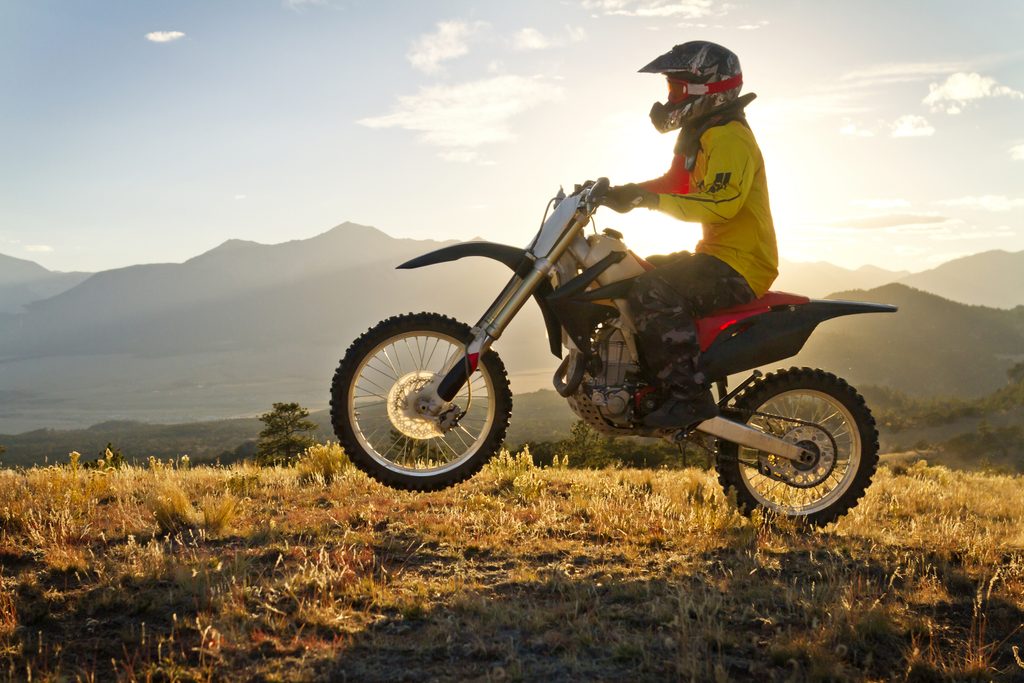
Towards the end of a long ride, technique often changes before the rider notices feeling exhausted.
The knees straighten. The hips stop moving. The elbows drop, and the hands begin holding the handlebars more tightly. Standing becomes something the rider endures rather than a position used for control.
This is where unnecessary standing creates problems. Remaining on the footpegs throughout every easy section does not automatically improve technique. It may simply consume energy that would be more useful later.
Sit when the ground is smooth and predictable. Relax your hands, breathe and allow the legs to recover. When the trail becomes difficult again, return to a strong standing position before you need it.
Physical preparation makes maintaining a useful enduro riding position easier, particularly over several consecutive days. Our guide to enduro fitness training explains how leg strength, core stability and cardiovascular fitness support control on longer rides. Hard Enduro Croatia
Common mistakes when standing on a dirt bike
Most problems with standing are not caused by the decision to stand. They come from the way the rider holds the position.
Common signs include:
- legs almost completely straight;
- body held too high above the motorcycle;
- weight supported through the handlebars;
- elbows locked;
- knees squeezing the motorcycle continuously;
- head and eyes directed at the front wheel;
- feet left in a poor position on the pegs;
- one fixed posture used for every type of terrain.
If your forearms become tired very quickly while standing, pay attention to how much weight is reaching your hands. Try riding a safe, easy section while keeping the fingers relaxed around the grips. If that feels impossible, bring your hips and feet into a position that supports your body without relying on the bars.
The aim is not to make the upper body completely still. It should remain loose enough to respond while the lower body manages much of the motorcycle’s movement.
A simple way to practise the transitions
Choose a safe, open area with level ground and good visibility. Ride slowly in a straight line and alternate between sitting and standing without changing speed.
Try to make each movement smooth and keep your throttle hand steady. If the motorcycle accelerates every time you stand or slows whenever you sit, you are probably placing too much pressure on the handlebars.
Once the basic movement feels natural, practise gentle turns in both positions. Notice how the motorcycle responds when you move forward on the seat, weight the outside peg or shift your hips while standing.
You can then introduce small bumps, wider turns and mild slopes. The aim is to build enough familiarity that changing position no longer requires conscious effort during a real trail section.
Formal instruction can be particularly useful here because a coach can see habits that are difficult to recognise from the motorcycle. The MSF’s off-highway training materials likewise place emphasis on hands-on practice and correct standing posture rather than learning technique from theory alone. Motorcycle Safety Foundation
Let the terrain decide
The strongest riders rarely look as though they are following a rigid rule. They sit, stand and move around the motorcycle according to what is approaching.
They may sit forward for a tight turn, stand as the trail straightens, move towards the front for a short climb and shift back as the ground drops away. The transitions appear natural because they happen early and with little wasted movement.
That adaptability is the real purpose of a good enduro riding position. Standing gives the motorcycle freedom and allows your legs to manage rough terrain. Sitting conserves energy, changes the load on the tyres and can improve control in slow corners. Neither position works everywhere.
Look ahead, stay relaxed and change position before the terrain forces you to do it. Over time, the choice stops feeling like a decision. You simply find yourself in the right place when the motorcycle needs you there.
If you would like to practise these techniques across rocky climbs, forest trails and varied natural terrain, explore the Enduro Experience Croatia tour packages. Routes can be adapted to the group’s experience, allowing riders to work on body position in conditions that match their level.
Frequently asked questions
Is it better to stand or sit on an enduro motorcycle?
Standing is generally better across rough terrain, obstacles, steep climbs and technical descents because it allows the motorcycle to move beneath you. Sitting can conserve energy, increase rear-wheel load and help with tight or slow corners. Skilled riders use both positions and change between them frequently.
What is the correct enduro riding position?
A correct enduro riding position is balanced, relaxed and adaptable. While standing, keep the knees and hips slightly bent, support your weight through the footpegs and avoid pulling on the handlebars. While sitting, remain active, move along the seat as needed and be ready to stand before the terrain becomes rough.
Should beginners stand while riding enduro?
Beginners should learn to stand correctly, but they do not need to stand continuously. Practising transitions on easy terrain is more useful than remaining on the footpegs until fatigue damages technique.
Why do enduro riders stand on the footpegs?
Standing allows the legs to absorb impacts and gives the motorcycle more freedom to move over rocks, roots and holes. It also makes rapid weight shifts easier and can improve the rider’s view of the trail ahead.
Should you squeeze the motorcycle with your knees?
Light contact can improve stability, but squeezing continuously wastes energy and may restrict the motorcycle’s movement. The appropriate pressure changes with the terrain, speed and manoeuvre.
How can I stop pulling on the handlebars when I stand?
Support your body through your feet and legs, keep the hips in a balanced position and practise standing without using your arms to lift yourself. Begin on smooth, open ground where you can concentrate on the movement without dealing with obstacles.